
Science
Scientists are gearing up for plant cultivation in space for a groundbreaking genetic investigation
It represents the inaugural endeavor to genetically intervene in plant species under space conditions.

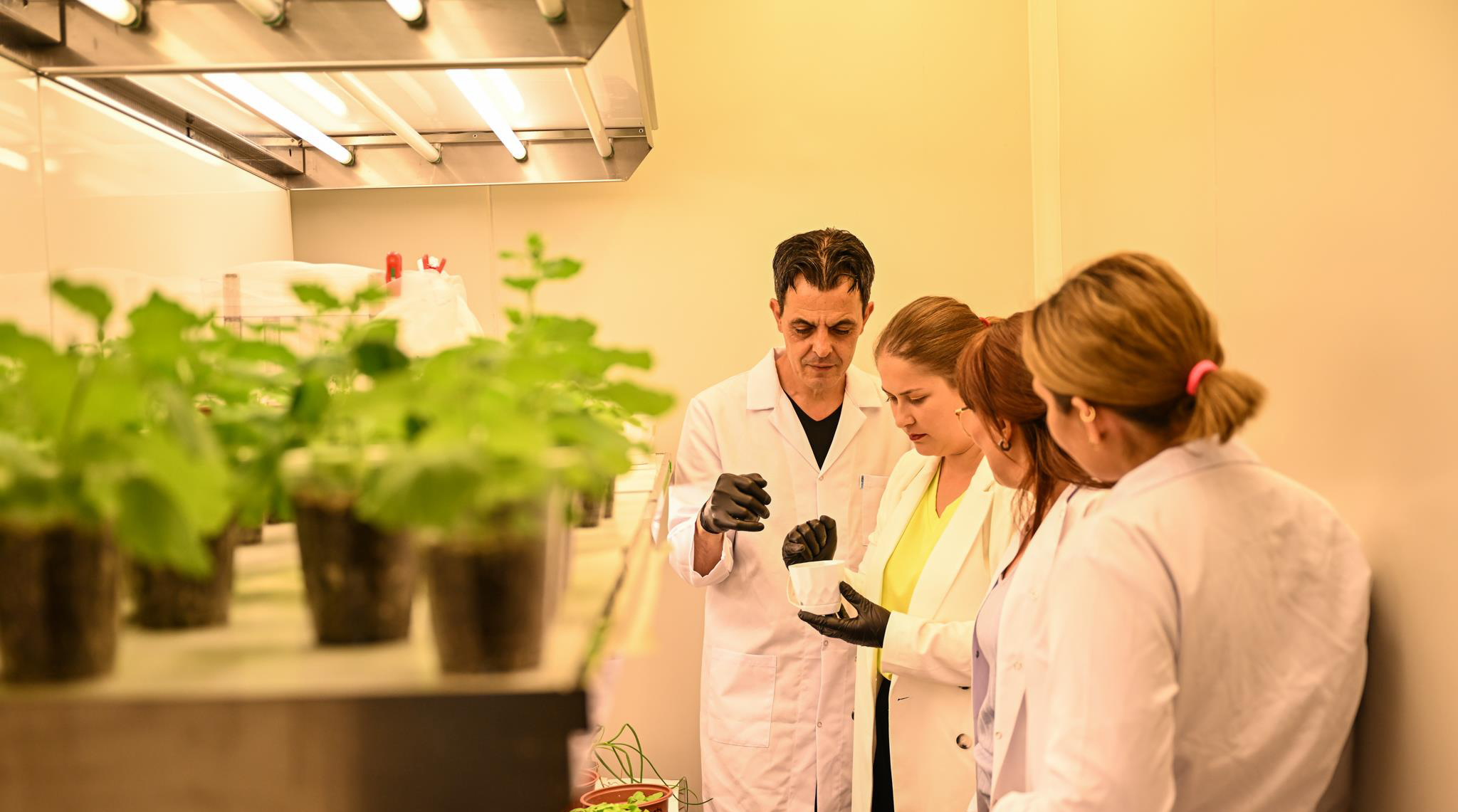
Efforts to plant cultivation in space have been on the rise, driven by humanity’s preparations for upcoming long-duration space missions. A team of scientists in Turkey is gearing up to join these endeavors.
Take NASA, for instance, which is exploring methods to supply astronauts with nutrition in a durable and readily absorbed format – freshly grown fruits and vegetables. The obstacle lies in accomplishing this within an enclosed setting devoid of sunlight and Earth’s gravitational pull.
Plant cultivation in space
A recent space-based study called “Investigation of CRISPR Gene Editing Efficiency in Plants under Microgravity Conditions” seeks to investigate how genetic modifications impact plants in a microgravity environment. The goal of the study is to offer insights into the prospects of sustainable agriculture beyond our planet.
The “Arabidopsis thaliana” plant has been selected as the model organism for this project because of its rapid germination cycle and widespread use in scientific research.
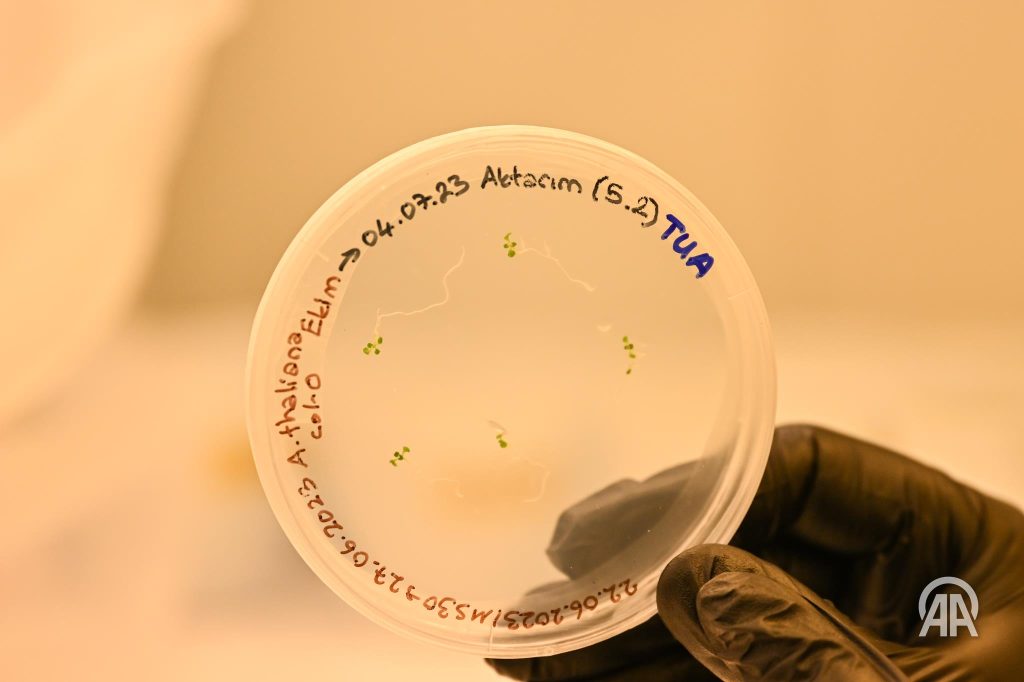
An experiment is prepared for space-based tests. (AA photo)
The scientists are undertaking a pioneering analysis that will pave the way for future research aimed at enhancing plant health through genetic interventions.
“Can this analysis be done under microgravity? Can this application be done? We are looking for answers to these questions,” Tugce Celayir, a PhD student from Istanbul’s Yildiz Technical University told Anadolu.
The project is scheduled to be departed for the International Space Station (ISS) as part of Turkey’s first manned space mission that will take place in the second half of 2023.
The first Turkish astronaut will carry out a total of 13 scientific experiments, including plant cultivation in space, aboard the ISS for seven to ten days. The Turkish Space Agency and the country’s space technologies research institute TUBITAK have partnered on 13 experiments.
A groundbreaking genetic investigation
This study is groundbreaking, as it represents the inaugural endeavor to genetically intervene in plant species under space conditions.
When discussing the prospect of future Mars colonies, it becomes crucial to establish an ecosystem capable of sustaining astronauts during extended space missions. Equally important is ensuring the well-being of the plants within this ecosystem.
“After this study, plants that can be a food source in the future can also be used to create an artificial ecosystem and to provide an oxygen source within this ecosystem,” Celayir said.
As plans for extended missions to the Moon and Mars take shape, a pivotal consideration is devising methods to provide nourishment to crews throughout their missions that could take weeks, and even years in space.
Here on Earth, researchers are actively investigating this concept by conducting experiments with diverse crops and equipment to determine its feasibility.

Mariana Trench: 8 Fascinating Facts About the Earth’s Deepest Place
10 most famous scientists who contributed to astronomy and space

Top 25 extremely stunning photos of Northern Lights of 2020 revealed

Meteorite makes Indonesian man a millionaire as piece crashes through his roof
It’s Now Possible to Predict Blood Cancer With Ten-Second Videos
This Inexpensive Method Speeds up Analysis of 3D Printed Metal Parts

SpaceX Dragon: A Game Changer for NASA
Tiny fish, big boom: This small fish found to roar like a gunshot

Turkish city unveils design of Mars Colony project for tourists

Researchers Reveal the Source of the Electron Rain Phenomenon
A New Study Reveals How Climate Change Will Affect Sound Travels Underwater
Here Are 6 Space Technologies We Can Benefit to Improve Life on Earth
SpaceX Announced Crew Dragon Will No Longer Be Produced
Russia Warns Sanctions on Moscow Could Endanger the ISS
A New Study Reveals How to Make Walking Easier

Remote-control cars to race on the Moon in 2021
Space Debris Problem Is Getting Worse: Causes and Removal Efforts of Rambling Junk
Microplastic Pollution Detected in Human Blood for the First Time

Nvidia CEO declares coding’s end in AI era
Here Is Blue Origin’s Touristic Rocket: The New Shepard Design
The Fastest Manned Plane in the World: Here’s The Insane Engineering of the X-15
Here Are 6 Space Technologies We Can Benefit to Improve Life on Earth
Pentagon Formed A New Group To Investigate UFO Reports
Space Debris Problem Is Getting Worse: Causes and Removal Efforts of Rambling Junk
From New Zealand to the US: The Rocket Lab Story
Here Is Blue Origin’s Touristic Rocket: The New Shepard Design
Take a Look at Earth From Space: Glasgow, Scotland
NASA Is Preparing Next Generation Spacesuits for Moon Mission and Beyond
Remote-control cars to race on the Moon in 2021
Meteorite makes Indonesian man a millionaire as piece crashes through his roof
NASA sends a new Space toilet for astronauts to ISS

 Earth & Energy5 years ago
Mariana Trench: 8 Fascinating Facts About the Earth’s Deepest Place

 Space6 years ago
10 most famous scientists who contributed to astronomy and space
- Skywatching6 years ago
Top 25 extremely stunning photos of Northern Lights of 2020 revealed
- Engineering6 years ago
Meteorite makes Indonesian man a millionaire as piece crashes through his roof

 Science5 years ago
It’s Now Possible to Predict Blood Cancer With Ten-Second Videos
 Engineering5 years ago
This Inexpensive Method Speeds up Analysis of 3D Printed Metal Parts
- Infographic6 years ago
SpaceX Dragon: A Game Changer for NASA

 Earth & Energy3 years ago
Tiny fish, big boom: This small fish found to roar like a gunshot