
Engineering
Bahraini F-16 Block 70 achieves historic first air-to-air kills against drones
The Royal Bahraini Air Force has officially recorded the first combat victories for the advanced F-16 Block 70 variant by intercepting and destroying two Iranian unmanned aerial vehicles.

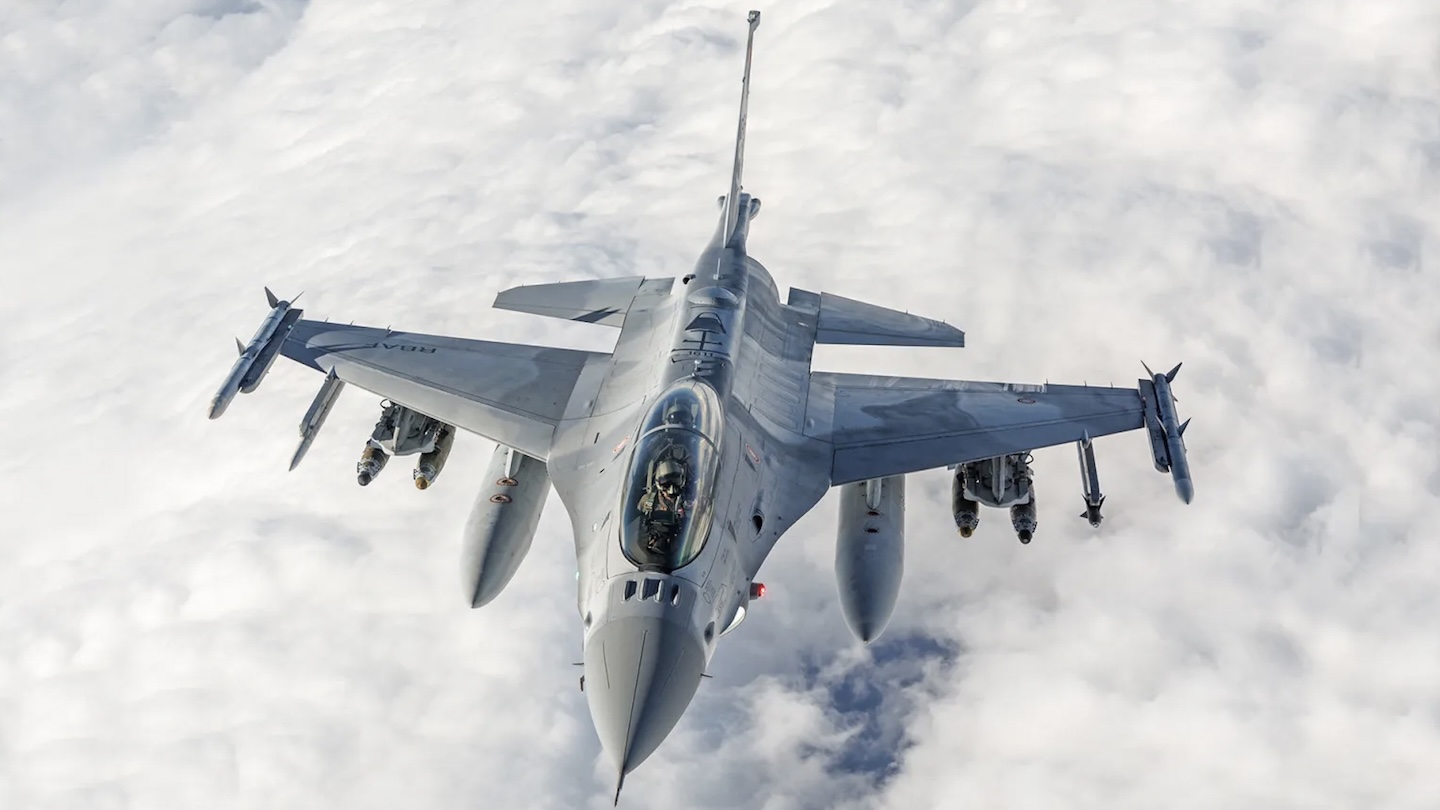
The Royal Bahraini Air Force (RBAF) recently made military history by utilizing the newest iteration of the F-16 to eliminate hostile threats in the Middle East. This milestone marks the first time the Block 70 variant has engaged and destroyed enemy targets in an air-to-air capacity since its introduction to global markets.
Lockheed Martin confirmed the successful engagement through social media channels by highlighting the combat-proven nature of the advanced jet. The defense contractor noted that the sophisticated aircraft successfully eliminated two hostile unmanned aerial vehicles during the recent regional conflict.
DETAILS OF THE SUCCESSFUL INTERCEPTION MISSION
The engagement took place on April 1 after two Iranian drones managed to bypass initial ground-based air defense systems during the early morning hours. Bahraini pilots were scrambled to respond to the breach, demonstrating the critical flexibility that crewed fighter jets provide in modern layered defense strategies.
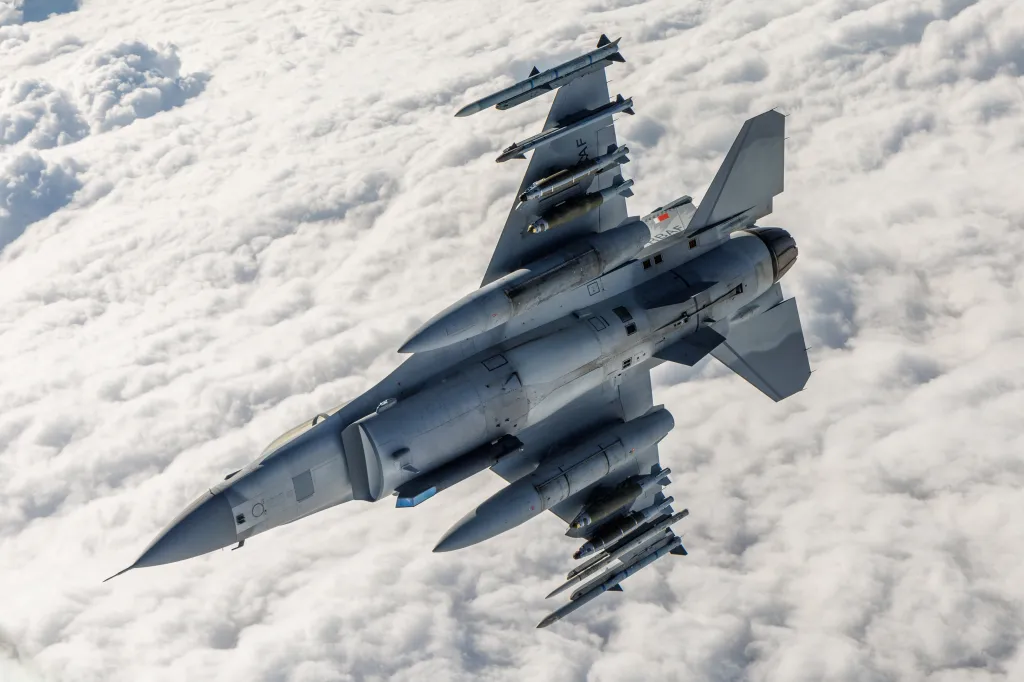
The RBAF pilot utilized a combination of high-tech weaponry to ensure the neutralization of the incoming drone threats. Reports indicate that a single AIM-120 Advanced Medium-Range Air-to-Air Missile and one AIM-9X Sidewinder were fired to bring down the targets.
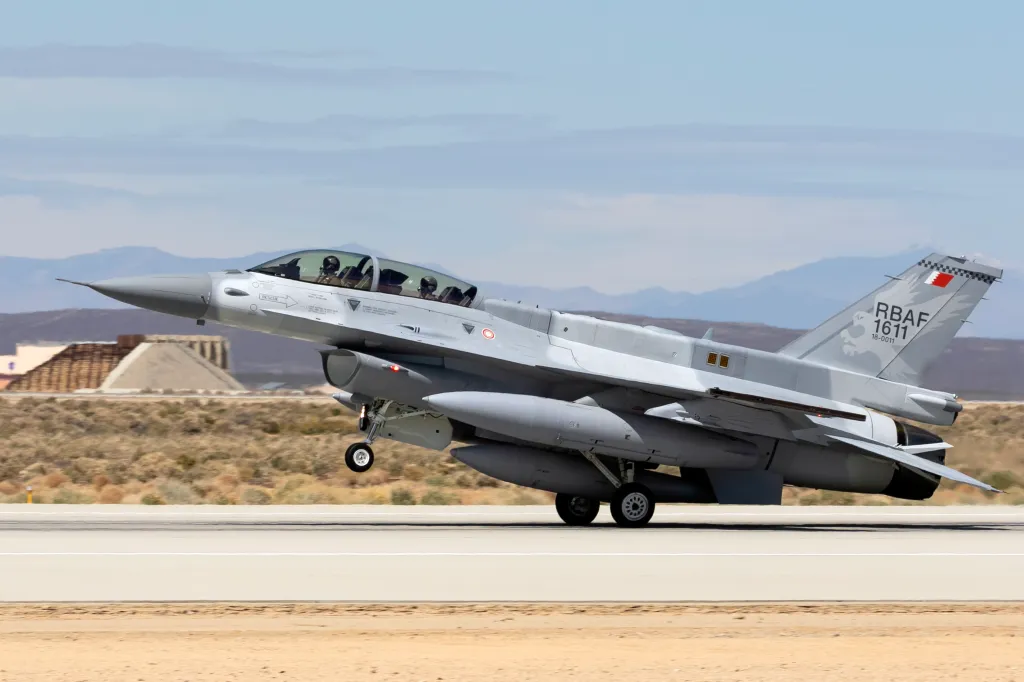
ADVANCED RADAR TECHNOLOGY VS DRONE THREATS
The Block 70 variant is uniquely equipped to handle the specific challenges posed by small and low-flying unmanned aerial systems. It features the Northrop Grumman AN/APG-83 Scalable Agile Beam Radar which utilizes active electronically scanned array technology to track difficult targets.
Traditional mechanically scanned radars often struggle to detect objects with small radar cross-sections or low infrared signatures. This new AESA system allows the Viper to maintain a lock on cruise missiles and drones that would otherwise remain hidden against ground clutter.
COST EFFICIENCY CHALLENGES IN MODERN WARFARE
The use of million-dollar missiles to destroy low-cost drones has sparked significant discussion regarding the economic sustainability of such aerial engagements. An AMRAAM missile carries a price tag of approximately $1 million while the AIM-9X Sidewinder costs around $450,000 per unit.
Military experts are looking toward laser-guided rockets as a potential solution to reduce the high cost of intercepting inexpensive aerial threats. While the U.S. Air Force is already integrating these cheaper alternatives, most international F-16 operators still rely on traditional high-end munitions for defense.
BAHRAIN AS THE PIONEER OPERATOR OF THE NEW VIPER
Bahrain holds a unique position in aviation history as the launch customer for the F-16 Block 70 variant. The kingdom placed an initial order for 16 of these advanced aircraft in 2019 to modernize its existing aerial fleet.
The first of these sophisticated jets arrived at Isa Air Base in 2024 to begin active service within the Royal Bahraini Air Force. This recent combat success validates the significant investment made by the island nation in upgrading its national defense capabilities.
MASSIVE DRONE AND MISSILE BARRAGE DEFENSE
The Bahrain Defense Force has been under immense pressure since the regional conflict escalated earlier this year on February 28. Military units have worked tirelessly to protect the small island kingdom from a massive influx of hostile projectiles and aircraft.
Official data reveals that Bahraini forces successfully intercepted 194 missiles and 515 drones before a temporary ceasefire was recently established. The F-16 Block 70 fleet played a pivotal role in maintaining the integrity of the nation’s airspace during these intense periods of activity.
MULTI-ROLE CAPABILITIES AND PRECISION WEAPONRY
Beyond its impressive air defense performance, the Block 70 is designed to execute a wide variety of offensive mission profiles. Testing in the United States has shown these jets carrying 500-pound Joint Direct Attack Munitions and laser-guided precision bombs.
The U.S. government has also approved a diverse array of weaponry for Bahrain including Harpoon anti-ship missiles and HARM anti-radiation missiles. This extensive arsenal allows the RBAF to address maritime, ground, and aerial threats with a single versatile platform.
SIGNIFICANT UPGRADES OVER LEGACY AIRCRAFT
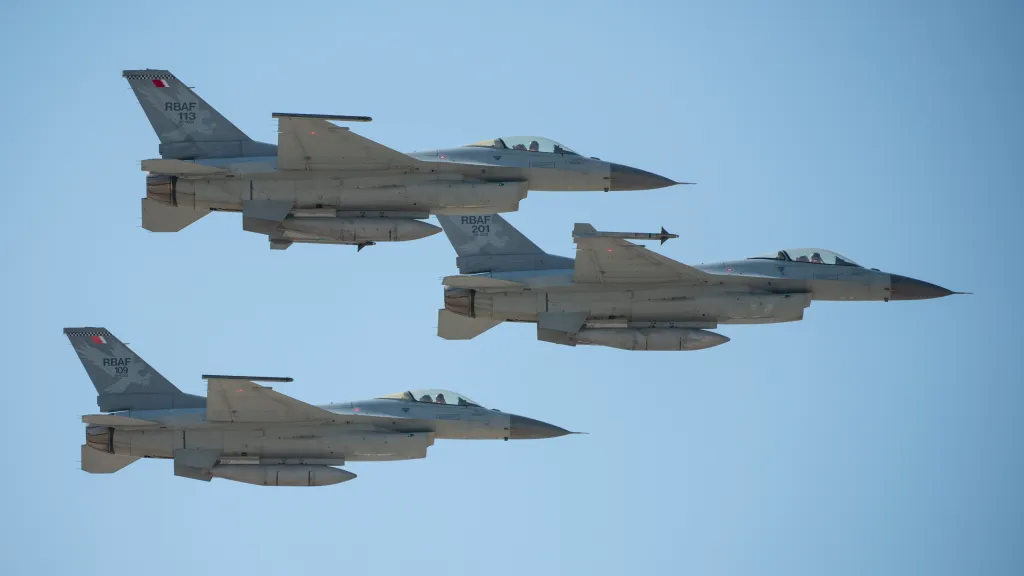
The new Block 70 Vipers represent a massive technological leap forward compared to the Block 40 versions Bahrain acquired in the 1990s. These newer models feature an extended airframe life of 12,000 hours and a completely modernized “digital backbone” for mission processing.
Pilots benefit from advanced cockpits equipped with wide-panel digital displays that provide superior situational awareness during complex combat scenarios. The addition of conformal fuel tanks also allows the aircraft to stay on station longer without the need for immediate refueling.
GROWING GLOBAL DEMAND FOR THE BLOCK 70
The success of the Bahraini missions has further cemented the F-16’s reputation as a premier choice for air forces around the globe. Five additional countries have followed Bahrain’s lead by signing contracts for the Block 70, bringing total orders to 148 aircraft.
Production for these new jets has moved to a dedicated facility in Greenville, South Carolina to meet the surging international demand. This recent air-to-air victory serves as a major milestone that ensures the iconic Viper will remain relevant for decades to come.

Mariana Trench: 8 Fascinating Facts About the Earth’s Deepest Place

10 most famous scientists who contributed to astronomy and space

Top 25 extremely stunning photos of Northern Lights of 2020 revealed

Meteorite makes Indonesian man a millionaire as piece crashes through his roof

It’s Now Possible to Predict Blood Cancer With Ten-Second Videos
This Inexpensive Method Speeds up Analysis of 3D Printed Metal Parts

SpaceX Dragon: A Game Changer for NASA

Tiny fish, big boom: This small fish found to roar like a gunshot

Turkish city unveils design of Mars Colony project for tourists

Researchers Reveal the Source of the Electron Rain Phenomenon

A New Study Reveals How Climate Change Will Affect Sound Travels Underwater

Here Are 6 Space Technologies We Can Benefit to Improve Life on Earth

SpaceX Announced Crew Dragon Will No Longer Be Produced

Russia Warns Sanctions on Moscow Could Endanger the ISS

A New Study Reveals How to Make Walking Easier

Remote-control cars to race on the Moon in 2021

Space Debris Problem Is Getting Worse: Causes and Removal Efforts of Rambling Junk

Microplastic Pollution Detected in Human Blood for the First Time

Nvidia CEO declares coding’s end in AI era

Here Is Blue Origin’s Touristic Rocket: The New Shepard Design
The Fastest Manned Plane in the World: Here’s The Insane Engineering of the X-15
Here Are 6 Space Technologies We Can Benefit to Improve Life on Earth
Pentagon Formed A New Group To Investigate UFO Reports
Space Debris Problem Is Getting Worse: Causes and Removal Efforts of Rambling Junk
From New Zealand to the US: The Rocket Lab Story
Here Is Blue Origin’s Touristic Rocket: The New Shepard Design

Take a Look at Earth From Space: Glasgow, Scotland

NASA Is Preparing Next Generation Spacesuits for Moon Mission and Beyond
Remote-control cars to race on the Moon in 2021
Meteorite makes Indonesian man a millionaire as piece crashes through his roof
NASA sends a new Space toilet for astronauts to ISS

 Earth & Energy5 years ago
Mariana Trench: 8 Fascinating Facts About the Earth’s Deepest Place

 Space6 years ago
10 most famous scientists who contributed to astronomy and space
- Skywatching6 years ago
Top 25 extremely stunning photos of Northern Lights of 2020 revealed
- Engineering6 years ago
Meteorite makes Indonesian man a millionaire as piece crashes through his roof

 Science5 years ago
It’s Now Possible to Predict Blood Cancer With Ten-Second Videos
 Engineering5 years ago
This Inexpensive Method Speeds up Analysis of 3D Printed Metal Parts
- Infographic6 years ago
SpaceX Dragon: A Game Changer for NASA

 Earth & Energy3 years ago
Tiny fish, big boom: This small fish found to roar like a gunshot