
Skywatching
‘Christmas Star’: Jupiter and Saturn to look like one large star this month
The two gas giants will be at their closest on the winter solstice, Dec. 21, 2020.


Saturn and Jupiter will look as though they are very close since 1623 on the day of the winter solstice, Dec. 21, also known as “Christmas Star” by some astronomers.
During the great conjunction of 2020, the two gas giants will be only a tenth of a degree apart, which means they will actually be hundreds of millions of miles apart from each other. The conjunctions happen every 20 years but not equally.
The last time Saturn and Jupiter were so close was July 16, 1623, but their meeting was observable to the unaided eye in March 1226.
“Keep in mind that while the two gas giants may appear close, in reality they are hundreds of millions of miles apart,” NASA says. “This will still be quite a striking sight, but you will need to look fast as both planets will set shortly after sunset.”
The winter solstice means the “shortest day” and the “longest night” for those who live in the Northern Hemisphere. However, the Southern Hemisphere will have the exact opposite situation on that day.
How to watch and photograph ‘Christmas Star’
Seeing fainter stars requires dark sites, but Saturn and Jupiter will appear brighter on the sky’s dome that a dark place is not inevitable to take some great photos. The only thing you need to have is a clear view toward the southwest and a camera with a tripod helping you hold the tool steady during longer exposures.
Stargazers will undoubtedly contend for taking the best photos of the event. “Try to frame the planets with something – the silhouette of a tree, an outdoor landscape, the arch of a building, or even a neon sign,” NASA recommends.
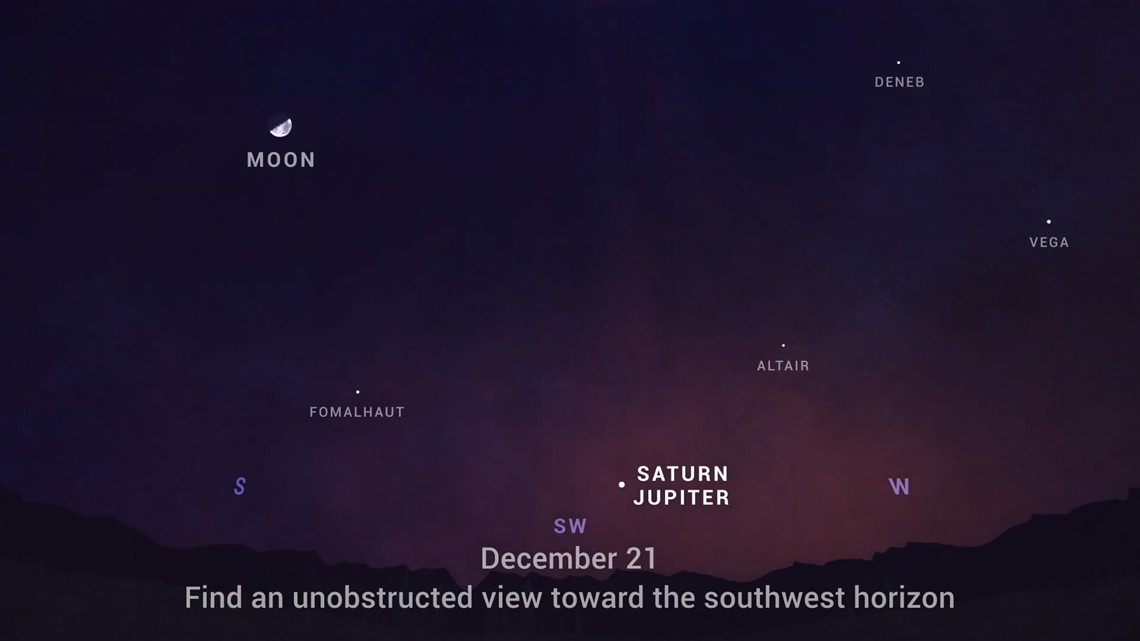
Credit: NASA/JPL Caltech.
In case of using a cell phone camera or a DSLR camera
If you have a cell phone camera with a night mode, which will automatically stabilize a long-exposure, will let you detect the two biggest planets. “This can be great for capturing the dark foreground of your photo. Some phones will let you use ‘night mode’ on exposures up to 30 seconds, if you also use a tripod.” the US-based agency says.
To catch the planets as sharp, you need to set your focus to Infinity (Manual Focus mode). Your aperture should be wide open to get maximum amount of light. Moreover, a tripod will make long exposures possible. If not, you can still captures perfect pictures with a short shutter speed (<1/4 second), according to NASA.
“To capture Jupiter and Saturn as sharp ‘points’ while using a tripod, use a shutter speed of up to a few seconds. If you are using a wide-angle lens, you can use a longer exposure,”it adds.
Jupiter is brighter than any star in our solar system. As for Saturn, the sixth planet from the Sun is as bright as the brightest stars.
The next great conjunction will happen this visibly on March 15, 2080.
READ MORE:

Mariana Trench: 8 Fascinating Facts About the Earth’s Deepest Place
10 most famous scientists who contributed to astronomy and space
Top 25 extremely stunning photos of Northern Lights of 2020 revealed

Meteorite makes Indonesian man a millionaire as piece crashes through his roof
It’s Now Possible to Predict Blood Cancer With Ten-Second Videos
This Inexpensive Method Speeds up Analysis of 3D Printed Metal Parts

SpaceX Dragon: A Game Changer for NASA
Tiny fish, big boom: This small fish found to roar like a gunshot

Turkish city unveils design of Mars Colony project for tourists

Researchers Reveal the Source of the Electron Rain Phenomenon

A New Study Reveals How Climate Change Will Affect Sound Travels Underwater
Here Are 6 Space Technologies We Can Benefit to Improve Life on Earth
SpaceX Announced Crew Dragon Will No Longer Be Produced
Russia Warns Sanctions on Moscow Could Endanger the ISS
A New Study Reveals How to Make Walking Easier

Remote-control cars to race on the Moon in 2021
Space Debris Problem Is Getting Worse: Causes and Removal Efforts of Rambling Junk

Microplastic Pollution Detected in Human Blood for the First Time

Nvidia CEO declares coding’s end in AI era
Here Is Blue Origin’s Touristic Rocket: The New Shepard Design
The Fastest Manned Plane in the World: Here’s The Insane Engineering of the X-15
Here Are 6 Space Technologies We Can Benefit to Improve Life on Earth
Pentagon Formed A New Group To Investigate UFO Reports
Space Debris Problem Is Getting Worse: Causes and Removal Efforts of Rambling Junk
From New Zealand to the US: The Rocket Lab Story
Here Is Blue Origin’s Touristic Rocket: The New Shepard Design
Take a Look at Earth From Space: Glasgow, Scotland
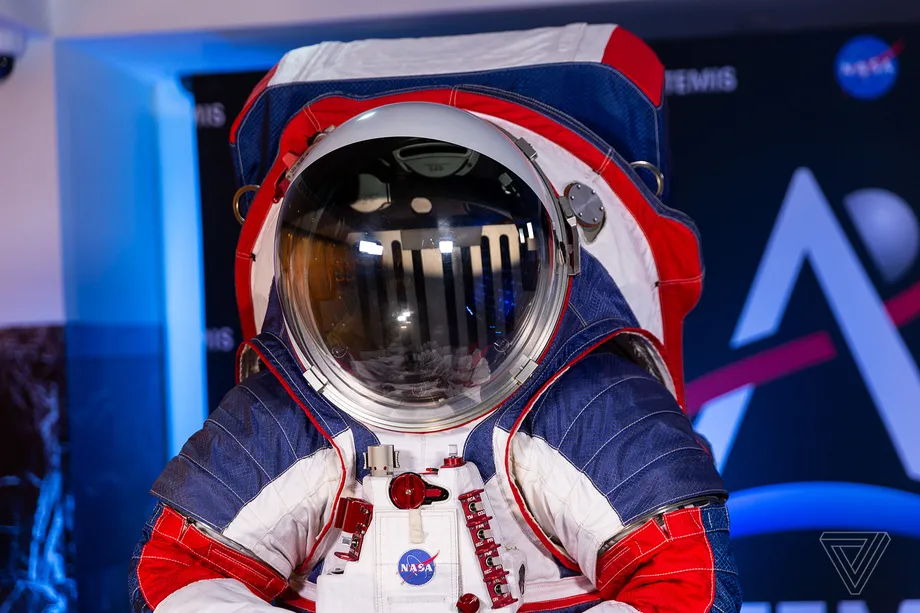
NASA Is Preparing Next Generation Spacesuits for Moon Mission and Beyond
Remote-control cars to race on the Moon in 2021
Meteorite makes Indonesian man a millionaire as piece crashes through his roof
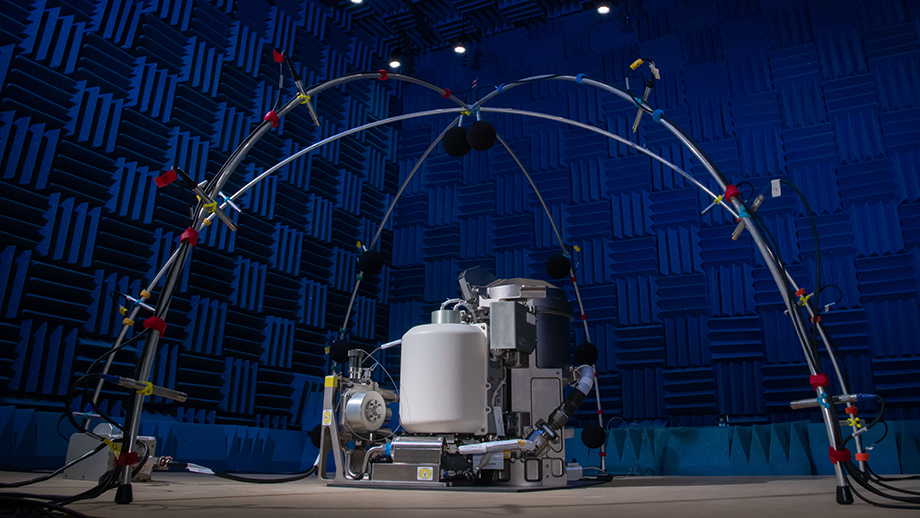
NASA sends a new Space toilet for astronauts to ISS

 Earth & Energy5 years ago
Mariana Trench: 8 Fascinating Facts About the Earth’s Deepest Place

 Space6 years ago
10 most famous scientists who contributed to astronomy and space
- Skywatching6 years ago
Top 25 extremely stunning photos of Northern Lights of 2020 revealed
- Engineering6 years ago
Meteorite makes Indonesian man a millionaire as piece crashes through his roof

 Science5 years ago
It’s Now Possible to Predict Blood Cancer With Ten-Second Videos
 Engineering5 years ago
This Inexpensive Method Speeds up Analysis of 3D Printed Metal Parts
- Infographic6 years ago
SpaceX Dragon: A Game Changer for NASA

 Earth & Energy3 years ago
Tiny fish, big boom: This small fish found to roar like a gunshot