
Space
US Astronomers Prepared a Wish List to Trace New Possible Earth-Like Planets
We can say discoveries are on the horizon.

It is widely accepted that climate change and its impacts drag Earth into the unknown. While floods and forest fires accelerate around the globe, scientists seek new solutions, of which finding habitable planets in the universe is one of them.
Astronomers and astrophysicists in the US have prepared a guiding roadmap for the next decade in the astronomy and astrophysics fields, specifically in the studies on potentially habitable planets, black holes, and the origin of galaxies.
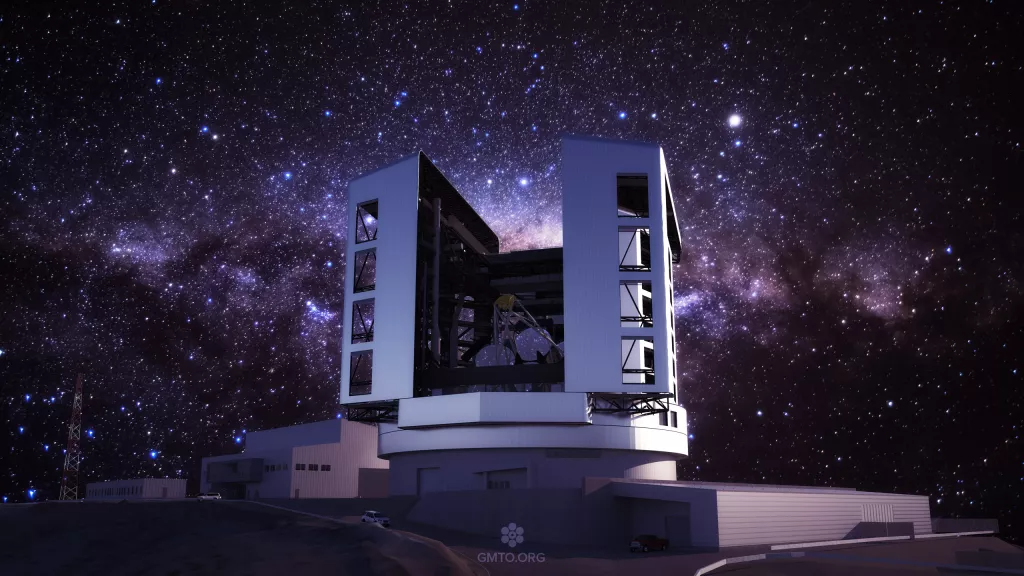
The National Academies of Sciences, Engineering, and Medicine published the to-do list. Called Astro2020, the report is released every ten years, according to MIT Technology Review. The new report presenting a justification for two gigantic projects –the Giant Magellan Telescope (GMT) and the Thirty Meter Telescope (TMT)– underscores that a possible failure of both projects is high probability without a substantial US federal investment.

TMT International Observatory
Once completed, the GMT and the TMT will have principal light-gathering surfaces 25 and 30 meters in diameter, respectively. These ground-based observatories will be approximately 100 times more sensitive than currently operating telescopes.
A physics professor at Louisiana State University, Gabriela González –who was involved in the report– said that they aimed to provide an applicable plan that prioritizes not only cost but community support. Native Hawaiians are known to oppose the construction of the Thirty Meter Telescope atop the Muna Kea volcano, on the island of Hawaii. Protesters have gathered to block the roads to Mauna Kea since July 2019.
However, willing researchers await the arrival of the telescope to view the endless universe in higher resolution. Described as the next-generation observatory in astronomy, the TMT will have a resolution of 12 times sharper than that of the Hubble Space Telescope.
AEI/MM/exozet
Key priorities include finding habitable planets
Three key scientific priorities announced for the coming decade as part of the Astro2020 include identifying and characterizing Earth-like exoplanets, one of the most popular research fields in astronomy recently. Human activities on the surface of the pale blue dot have considerably changed the atmosphere of our planet, and scientists wish to find planet candidates that could support complex life.
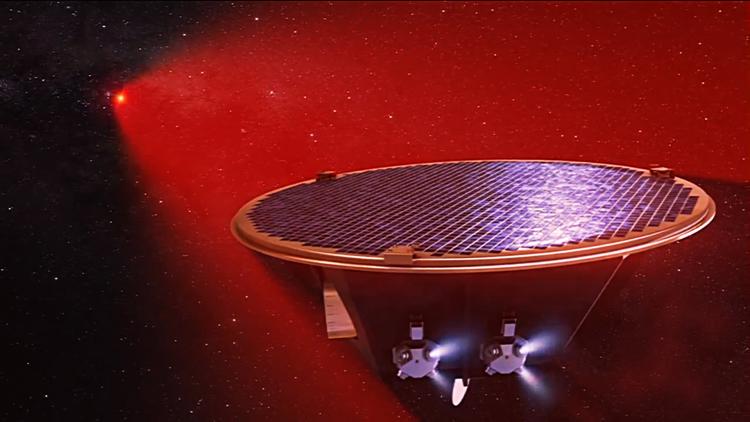
According to the second priority, astronomers will attempt to shed light on the mysterious past of the universe by scrutinizing the nature of black holes, white dwarfs, and stellar explosions. Investigations through a proposed space probe to detect and measure gravitational waves, the Laser Interferometer Space Antenna, or LISA, could whet our understanding regarding astronomical measurements.
[irp posts=”2264″ name=”NASA Telescope Identified the First Planet Candidate Outside Our Galaxy”]
Last but not least, the third priority will aim to answer the questions of the origins and evolution of galaxies and their complex structures using spectroscopy.
Gonzales is hopeful the roadmap will make way for new scientific gains. “This community is not just astronomers. They are astronomers and the people who benefit from the astronomy,” she concluded.
WATCH: Inside the controversy over building one of the world’s largest telescopes

Mariana Trench: 8 Fascinating Facts About the Earth’s Deepest Place

10 most famous scientists who contributed to astronomy and space

Top 25 extremely stunning photos of Northern Lights of 2020 revealed

Meteorite makes Indonesian man a millionaire as piece crashes through his roof

It’s Now Possible to Predict Blood Cancer With Ten-Second Videos

This Inexpensive Method Speeds up Analysis of 3D Printed Metal Parts

SpaceX Dragon: A Game Changer for NASA
Tiny fish, big boom: This small fish found to roar like a gunshot

Turkish city unveils design of Mars Colony project for tourists

Researchers Reveal the Source of the Electron Rain Phenomenon
A New Study Reveals How Climate Change Will Affect Sound Travels Underwater
Here Are 6 Space Technologies We Can Benefit to Improve Life on Earth
SpaceX Announced Crew Dragon Will No Longer Be Produced
Russia Warns Sanctions on Moscow Could Endanger the ISS
A New Study Reveals How to Make Walking Easier

Remote-control cars to race on the Moon in 2021

Space Debris Problem Is Getting Worse: Causes and Removal Efforts of Rambling Junk

Microplastic Pollution Detected in Human Blood for the First Time

Nvidia CEO declares coding’s end in AI era
Here Is Blue Origin’s Touristic Rocket: The New Shepard Design

The Fastest Manned Plane in the World: Here’s The Insane Engineering of the X-15
Here Are 6 Space Technologies We Can Benefit to Improve Life on Earth
Pentagon Formed A New Group To Investigate UFO Reports
Space Debris Problem Is Getting Worse: Causes and Removal Efforts of Rambling Junk
From New Zealand to the US: The Rocket Lab Story
Here Is Blue Origin’s Touristic Rocket: The New Shepard Design

Take a Look at Earth From Space: Glasgow, Scotland
NASA Is Preparing Next Generation Spacesuits for Moon Mission and Beyond
Remote-control cars to race on the Moon in 2021
Meteorite makes Indonesian man a millionaire as piece crashes through his roof
NASA sends a new Space toilet for astronauts to ISS

 Earth & Energy5 years ago
Mariana Trench: 8 Fascinating Facts About the Earth’s Deepest Place

 Space6 years ago
10 most famous scientists who contributed to astronomy and space
- Skywatching6 years ago
Top 25 extremely stunning photos of Northern Lights of 2020 revealed
- Engineering6 years ago
Meteorite makes Indonesian man a millionaire as piece crashes through his roof

 Science5 years ago
It’s Now Possible to Predict Blood Cancer With Ten-Second Videos
 Engineering5 years ago
This Inexpensive Method Speeds up Analysis of 3D Printed Metal Parts
- Infographic6 years ago
SpaceX Dragon: A Game Changer for NASA

 Earth & Energy3 years ago
Tiny fish, big boom: This small fish found to roar like a gunshot