
Space
Caving on the Moon’s Surface? These Robots Will Reveal Mysteries Under the Moon Pits
Another mission coming.

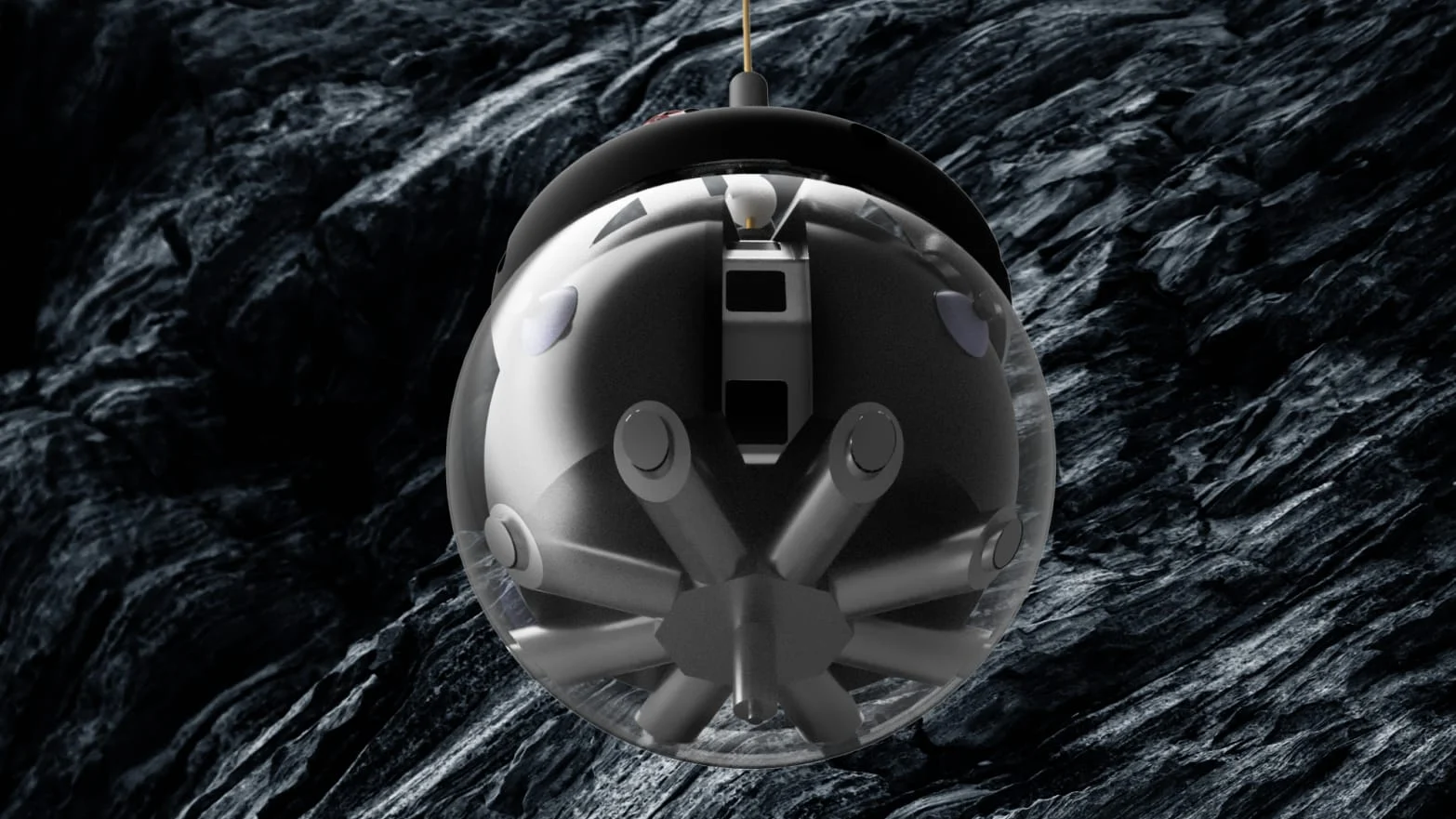
The Moon’s surface is home to hundreds of steep holes known as Moon pits, which scientists suspect are subterranean tunnels. The pits, which are more similar to enormous caves, are not only proof of the Moon’s geological past, but they may also serve as a safe hideout for future lunar explorers.
Although imaging spacecraft helps scientists figure out where the holes are, examining them further to find what is underneath has never been done before. In addition to conducting scientific documentation, if one day sending humans down there becomes another mission, it’s critical to ensure that the holes are actually safe for humans to visit.
The European Space Agency (ESA) has the potential for disclosure. The agency will have its first spelunking mission using two robots called RoboCrane and DAEDALUS. “We have gathered a spectrum of over 60 experts in many different areas of science and engineering to design a mission to enter a pit on the Moon’s surface and explore the entrance to a lunar cave,” ESA stated on Instagram.
ESA’s proposal for a mission to explore the Moon pits
The Lunar Cave Mission was initiated in 2019 when ESA released the Open Space Innovation Platform (OSIP), which solicited ideas for detecting, mapping, and exploring lunar caverns. ESA’s progress on the mission has brought the agency to the forefront of space exploration, as it goes not only to the exploration of the Moon‘s surface but also its subsurface.
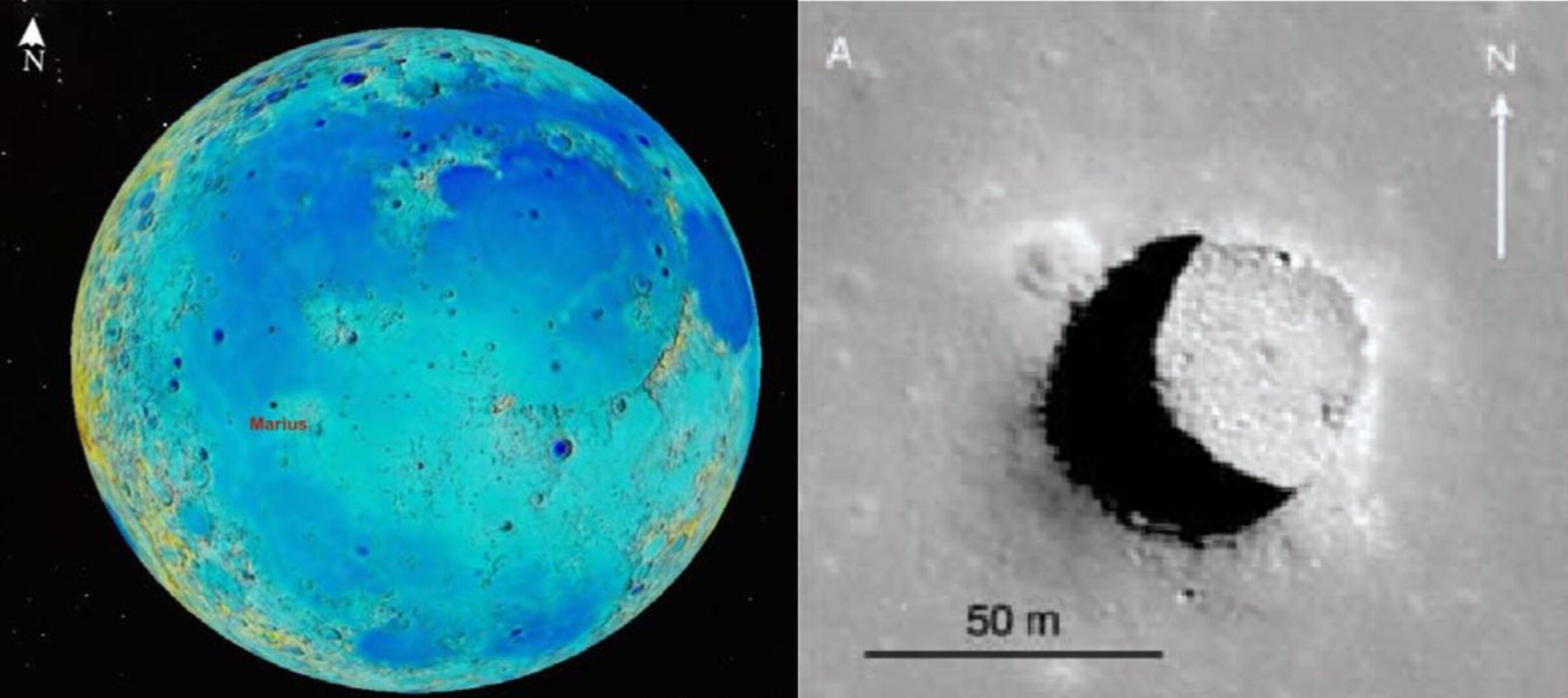
Image: Marius Hills Pit | ESA
The project is surely backed by professionals, including lunar pit mission robot specialists and ESA experts. The mission might launch as early as 2033 on Ariane 6, with the robots landing on the lunar surface using the European Large Logistic Lander (EL3). The first exploration target will be the Marius Hills hole, which will take around 14 Earth days to complete a full day on the Moon.
“A mission like this would require the development of innovative technologies, encouraging the space sector to develop new solutions compared to previous lunar missions,” said cave scientist and planetary lava tube expert, Francesco Sauro, to ESA. According to him, the mission will not only be a crucial step towards exploring the Moon but also Mars.
Technology to support the mission
The Moon Cave Mission will employ two robots that will perform two different tasks. The robotic crane RoboCrane is a robotic arm-equipped instrument that will lower the cave-exploring robot DAEDALUS into the Moon’s pit.
DAEDALUS will explore the cave on its trip down, documenting the entrance to the hallway through the cave and eventually mapping out the area closest to the bottom.
DAEDALUS is a 46-centimeter-diameter sphere outfitted with a stereoscopic camera, a laser radar for 3D mapping of cave interiors, temperature and radiation monitoring devices, and an expendable arm for clearing obstructions and testing rock properties.
“A view into the interior of a lunar cave would be true exploration – it would reveal unexpected scientific information,” Francesco stated. The mission’s feasibility has been confirmed, and it will be a wonderful scientific exploration.
However, the Moon Cave Mission’s strategy will need to be reviewed further by the team. A lunar test range will also be prepared to determine what strategy is most appropriate for the project. There is still plenty for them to accomplish in the coming years to completely fulfill their purpose.

Mariana Trench: 8 Fascinating Facts About the Earth’s Deepest Place

10 most famous scientists who contributed to astronomy and space

Top 25 extremely stunning photos of Northern Lights of 2020 revealed

Meteorite makes Indonesian man a millionaire as piece crashes through his roof

It’s Now Possible to Predict Blood Cancer With Ten-Second Videos
This Inexpensive Method Speeds up Analysis of 3D Printed Metal Parts

SpaceX Dragon: A Game Changer for NASA
Tiny fish, big boom: This small fish found to roar like a gunshot

Turkish city unveils design of Mars Colony project for tourists

Researchers Reveal the Source of the Electron Rain Phenomenon
A New Study Reveals How Climate Change Will Affect Sound Travels Underwater
Here Are 6 Space Technologies We Can Benefit to Improve Life on Earth
SpaceX Announced Crew Dragon Will No Longer Be Produced
Russia Warns Sanctions on Moscow Could Endanger the ISS

A New Study Reveals How to Make Walking Easier

Remote-control cars to race on the Moon in 2021

Space Debris Problem Is Getting Worse: Causes and Removal Efforts of Rambling Junk

Microplastic Pollution Detected in Human Blood for the First Time

Nvidia CEO declares coding’s end in AI era
Here Is Blue Origin’s Touristic Rocket: The New Shepard Design
The Fastest Manned Plane in the World: Here’s The Insane Engineering of the X-15
Here Are 6 Space Technologies We Can Benefit to Improve Life on Earth
Pentagon Formed A New Group To Investigate UFO Reports
Space Debris Problem Is Getting Worse: Causes and Removal Efforts of Rambling Junk
From New Zealand to the US: The Rocket Lab Story
Here Is Blue Origin’s Touristic Rocket: The New Shepard Design
Take a Look at Earth From Space: Glasgow, Scotland

NASA Is Preparing Next Generation Spacesuits for Moon Mission and Beyond
Remote-control cars to race on the Moon in 2021
Meteorite makes Indonesian man a millionaire as piece crashes through his roof
NASA sends a new Space toilet for astronauts to ISS

 Earth & Energy5 years ago
Mariana Trench: 8 Fascinating Facts About the Earth’s Deepest Place

 Space6 years ago
10 most famous scientists who contributed to astronomy and space
- Skywatching6 years ago
Top 25 extremely stunning photos of Northern Lights of 2020 revealed
- Engineering6 years ago
Meteorite makes Indonesian man a millionaire as piece crashes through his roof

 Science5 years ago
It’s Now Possible to Predict Blood Cancer With Ten-Second Videos
 Engineering5 years ago
This Inexpensive Method Speeds up Analysis of 3D Printed Metal Parts
- Infographic6 years ago
SpaceX Dragon: A Game Changer for NASA

 Earth & Energy3 years ago
Tiny fish, big boom: This small fish found to roar like a gunshot