
Space
4 Reasons the James Webb Space Telescope Will Be a Special Gift for Astronomers
A new toy, other discoveries.

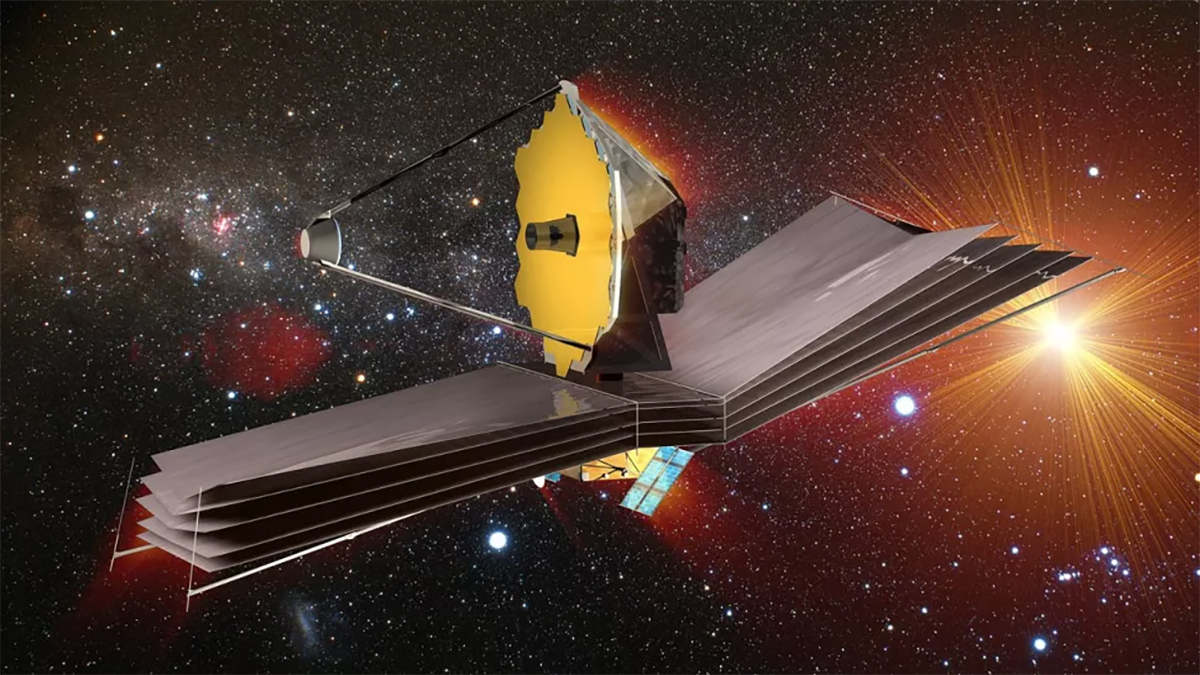
The James Webb Space Telescope is finally on its way to launch after multiple delays. According to the most recent NASA update, Webb will sail on Ariane 5 from ESA’s launch pad in French Guiana on Dec 24, 2021. It will be one of the most anticipated launches because the Webb telescope, which took years to prepare, will be the largest space telescope ever built and said to have many times the capabilities of its forerunner, the Hubble Space Telescope.
Hubble definitely deserves honor for its merit in the past three decades. Not only did Hubble collect over a million observations, but it was also the inspiration of the Webb development. The Webb telescope, named for a NASA early administrator, James E. Webb, will be mainly managed by NASA, which majorly funds the telescope, with both European and Canadian Space Agency serving as partners.
Webb’s launch costs rose significantly due to the long delay since its initial ride plan was in 2007. The current expected budget is around $9.7 billion, with 861 million dedicated to supporting the operation of the first five years after launch. Despite the high cost, astronomers are thrilled to welcome Webb and bring it into space. What is so special about the Webb telescope? Here are 4 points that will address it.
[irp posts=”2545″ name=”Futuristic but Possible: An International Effort Will Make Rocket Fuel From Space Junk”]
1- Comprehending the beginnings of the universe
Telescopes act like time machines. The objects captured from distant light-years away are not seen as they are at the moment of the capture. That’s because the distance in light-years represents the number of years that the light of the objects will take to reach Earth. So, seeing a captured 23,000 light-years-away galaxy means seeing it as it was 23,000 years ago.
The James Webb Space Telescope will go beyond what Hubble accomplished in capturing galaxies from billion years ago. With its infrared sensor, it can see further back in time. The light from distant objects spreads out as the cosmos is expanding, which increases the wavelength. When the light reaches the Webb telescope, the light produced in the waveband will approach it in the infrared band, which Webb is specialized for.
NASA expects that Webb’s most distant-capture capacity and infrared sensor will allow it to travel back in time to see when galaxies first formed. With perhaps never-before-discovered data, astronomers will better examine and comprehend the first formation of the universe.
2- Observing the birth of stars
While the formation of stars from the moment they are born, grow, evolve, and die is generally well understood, there are parts about stars that remain unknown. The birthplaces of stars are wrapped in dust, and telescopes with visible light cannot pierce into the dust cloud to see further what’s inside.
But in the infrared wavelength from the Webb telescope, the dust will appear transparent. It will allow the astronomers to see further that might as well reveal other secrets of star formation, including our Sun.
Baby stars, in particular, formed in the dustiest areas. It will be hard for astronomers to study it, but the James Webb Space Telescope’s infrared sensitivity and great resolution will let them see through the dense dust with unparalleled clarity. In turn, astronomers will learn how dust creates stars, why stars develop in constellations, and how planets emerge around them.
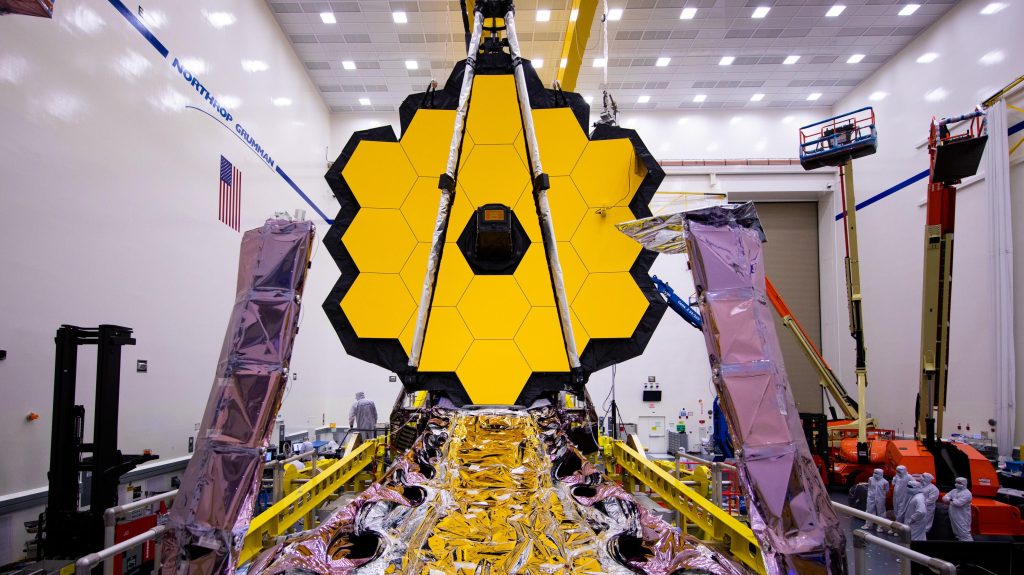
Webb’s capacity to see through dust and capture high-resolution images will provide a clear picture of a planetary system. Credit: Northrop Grumman
3- Investigating black holes on a new level
Black hole research has usually relied on X-ray telescopes. As is commonly known, nothing can escape a black hole, and they are invisible. However, to see the presence of a black hole, the objects in its vicinity can be an indication. X-ray telescopes observe events in the neighborhood of black holes, which are very hot and emit X-rays. For example, stars that annihilate after passing too close to a black hole.
Webb, on the other hand, will deliver something on a different level. Despite the area where the stars gather being densely packed with dust, Webb is able to penetrate and see beyond it, thanks to its superb infrared sensor. The James Webb Space Telescope is capable of providing more detailed information on the chemical composition and temperature of black hole stars. The data can also help probe more about black holes themselves, such as their sizes and how they prey on stars.
Credit: NASA’s Goddard Space Flight Center
4- Unlocking other unseen discoveries by the James Webb Space Telescope
Webb is the first telescope with a remarkable breakthrough improvement; its capability. It opens up opportunities for astronomers to be exposed to other discoveries that the Webb telescope might make.
One of those is the search for exoplanets, particularly planets with chemical compositions comparable to Earth that support life. The James Webb Space Telescope, with its infrared and spectroscopic capabilities for analyzing a planet’s chemical composition and physical parameters, will contribute to the research.
Webb’s capacity to see through dust and capture high-resolution images will provide a clear picture of a planetary system. In addition, this giant telescope will examine the atmospheres of exoplanets, and a telescope with powerful infrared sensors is essential since the chemicals that make up a planet’s atmosphere are active at this wavelength.
[irp posts=”2475″ name=”Invisible and Mysterious, Black Holes Play an Important Role in The Universe”]

Mariana Trench: 8 Fascinating Facts About the Earth’s Deepest Place
10 most famous scientists who contributed to astronomy and space
Top 25 extremely stunning photos of Northern Lights of 2020 revealed

Meteorite makes Indonesian man a millionaire as piece crashes through his roof
It’s Now Possible to Predict Blood Cancer With Ten-Second Videos
This Inexpensive Method Speeds up Analysis of 3D Printed Metal Parts

SpaceX Dragon: A Game Changer for NASA
Tiny fish, big boom: This small fish found to roar like a gunshot

Turkish city unveils design of Mars Colony project for tourists

Researchers Reveal the Source of the Electron Rain Phenomenon
A New Study Reveals How Climate Change Will Affect Sound Travels Underwater
Here Are 6 Space Technologies We Can Benefit to Improve Life on Earth
SpaceX Announced Crew Dragon Will No Longer Be Produced
Russia Warns Sanctions on Moscow Could Endanger the ISS
A New Study Reveals How to Make Walking Easier

Remote-control cars to race on the Moon in 2021
Space Debris Problem Is Getting Worse: Causes and Removal Efforts of Rambling Junk

Microplastic Pollution Detected in Human Blood for the First Time
Nvidia CEO declares coding’s end in AI era
Here Is Blue Origin’s Touristic Rocket: The New Shepard Design

The Fastest Manned Plane in the World: Here’s The Insane Engineering of the X-15
Here Are 6 Space Technologies We Can Benefit to Improve Life on Earth
Pentagon Formed A New Group To Investigate UFO Reports
Space Debris Problem Is Getting Worse: Causes and Removal Efforts of Rambling Junk
From New Zealand to the US: The Rocket Lab Story
Here Is Blue Origin’s Touristic Rocket: The New Shepard Design
Take a Look at Earth From Space: Glasgow, Scotland
NASA Is Preparing Next Generation Spacesuits for Moon Mission and Beyond
Remote-control cars to race on the Moon in 2021
Meteorite makes Indonesian man a millionaire as piece crashes through his roof
NASA sends a new Space toilet for astronauts to ISS

 Earth & Energy5 years ago
Mariana Trench: 8 Fascinating Facts About the Earth’s Deepest Place

 Space6 years ago
10 most famous scientists who contributed to astronomy and space
- Skywatching6 years ago
Top 25 extremely stunning photos of Northern Lights of 2020 revealed
- Engineering6 years ago
Meteorite makes Indonesian man a millionaire as piece crashes through his roof

 Science5 years ago
It’s Now Possible to Predict Blood Cancer With Ten-Second Videos
 Engineering5 years ago
This Inexpensive Method Speeds up Analysis of 3D Printed Metal Parts
- Infographic6 years ago
SpaceX Dragon: A Game Changer for NASA

 Earth & Energy3 years ago
Tiny fish, big boom: This small fish found to roar like a gunshot