
Write to Cahid Atik at cahid.atik@orbitinside.com
Space
Legendary Arecibo space telescope to be dismantled, shocking astronomical community
One of the most productive telescopes in astronomy comes to an end, distressing scientists who worked with the legend.

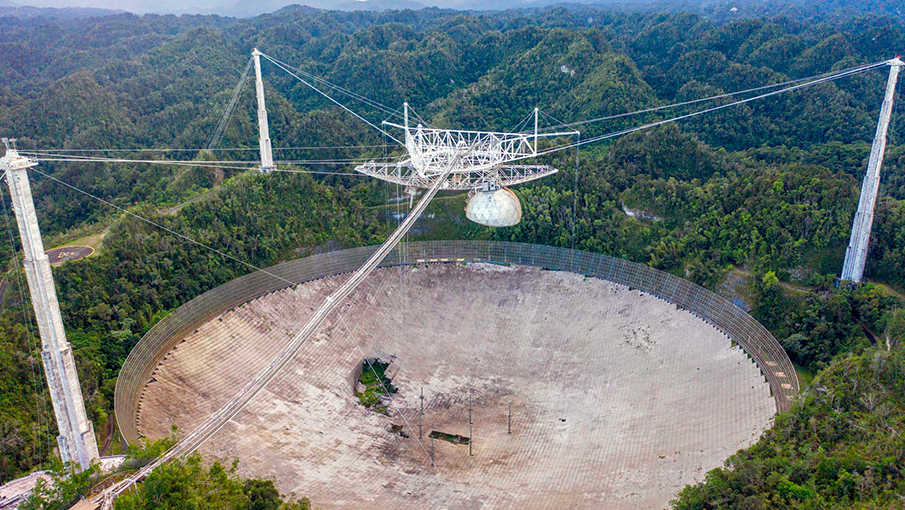
It is a sad event for astronomers who have worked with the 305-metre-wide radio Arecibo telescope in Puerto Rico jungle for years. The telescope will be closed permanently due to the broken two cables supporting the system, of which engineers say it is unfeasible to mend it safely.
The US National Science Foundation (NSF), which owns the Arecibo Observatory, announced Thursday the 57-year-old radio telescope would be decommissioned, adding that attempts to repair could put workers and staff in danger.
“I don’t know what to say. It’s just unbelievable,” says Robert Kerr, a former director of the observatory. Abel Mendez, an astrobiologist who uses the observatory, shares the same feelings with Kerr, saying: “I am totaly devastated.”
Arecibo telescope will be demolished under control
Built in 1963, the Arecibo telescope was the world’s largest radio telescope from which astronomers sent signals to search for life beyond our solar system, and make contact. Also, the first confirmed exoplanet orbiting the pulsar PSR B1257+12 was discovered in 1990 via the Arecibo. Near-Earth asteroids and fast radio bursts are among its other works.
Limited scientific work will continue on the site. Ralph Gaume, director of NSF’s astronomy division, said at a briefing that they want to conserve other instruments at the site. Hazardous cables could, however, harm the other structures. “A controlled decommissioning gives us the opportunity to preserve valuable assets that the observatory has,” Gaume said.
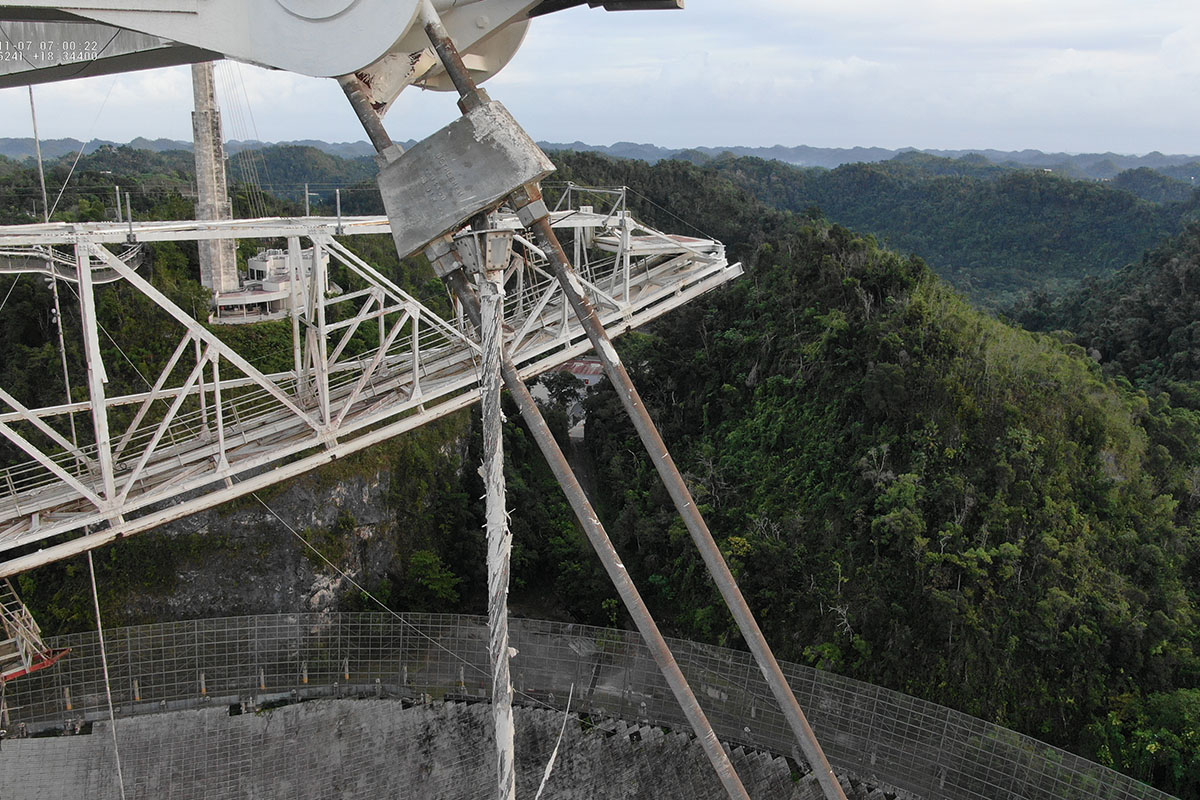
The main cable of the Arecibo Observatory broke. UCF photo.
The first cable departed from its socket shattered panels at the edge of the dish, but the second cable caused a substantial damage in the main dish, making green vegetation below visible.
Although the Arecibo doesn’t discover potentially dangerous space rocks, it is advantageous to inquire them. “The observatory can ping such objects with radar to decrypt their shape, rotation, surface features, and trajectory through space,” astrobiologist Mendez said.
China’s 500-meter Aperture Spherical Telescope (FAST) opened in 2016 is not currently capable of doing such radar studies, per Nature.
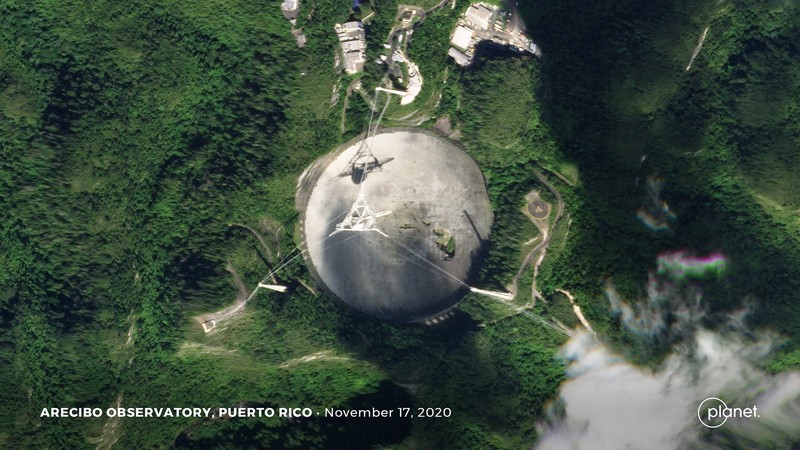
A high-resolution satellite image of the Arecibo dish. Planet Labs photo.

Earth & Energy5 years ago
Mariana Trench: 8 Fascinating Facts About the Earth’s Deepest Place

Space6 years ago
10 most famous scientists who contributed to astronomy and space

Skywatching6 years ago
Top 25 extremely stunning photos of Northern Lights of 2020 revealed

Engineering6 years ago
Meteorite makes Indonesian man a millionaire as piece crashes through his roof

Science4 years ago
It’s Now Possible to Predict Blood Cancer With Ten-Second Videos

Engineering5 years ago
This Inexpensive Method Speeds up Analysis of 3D Printed Metal Parts

Infographic6 years ago
SpaceX Dragon: A Game Changer for NASA
Earth & Energy3 years ago
Tiny fish, big boom: This small fish found to roar like a gunshot

Engineering6 years ago
Turkish city unveils design of Mars Colony project for tourists

Science4 years ago
Researchers Reveal the Source of the Electron Rain Phenomenon

Earth & Energy4 years ago
A New Study Reveals How Climate Change Will Affect Sound Travels Underwater

Tech5 years ago
Here Are 6 Space Technologies We Can Benefit to Improve Life on Earth

Space4 years ago
SpaceX Announced Crew Dragon Will No Longer Be Produced
Space4 years ago
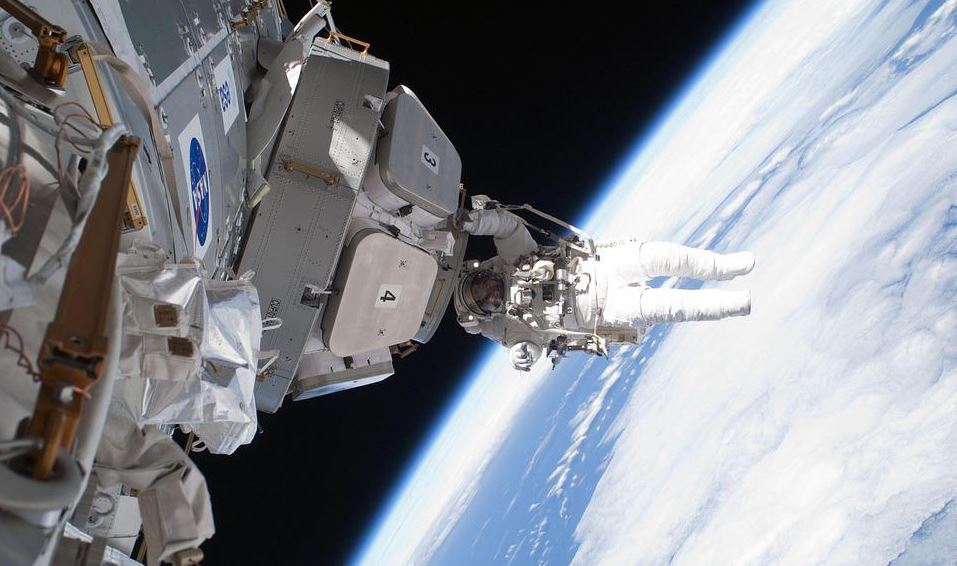
Russia Warns Sanctions on Moscow Could Endanger the ISS

Engineering4 years ago
A New Study Reveals How to Make Walking Easier

Engineering6 years ago
Remote-control cars to race on the Moon in 2021

Space5 years ago
Space Debris Problem Is Getting Worse: Causes and Removal Efforts of Rambling Junk

Science4 years ago
Microplastic Pollution Detected in Human Blood for the First Time

Tech3 years ago
Nvidia CEO declares coding’s end in AI era

Space5 years ago
Here Is Blue Origin’s Touristic Rocket: The New Shepard Design

Engineering5 years ago
The Fastest Manned Plane in the World: Here’s The Insane Engineering of the X-15
Tech5 years ago
Here Are 6 Space Technologies We Can Benefit to Improve Life on Earth

Space5 years ago
Pentagon Formed A New Group To Investigate UFO Reports
Space5 years ago
Space Debris Problem Is Getting Worse: Causes and Removal Efforts of Rambling Junk
Space5 years ago
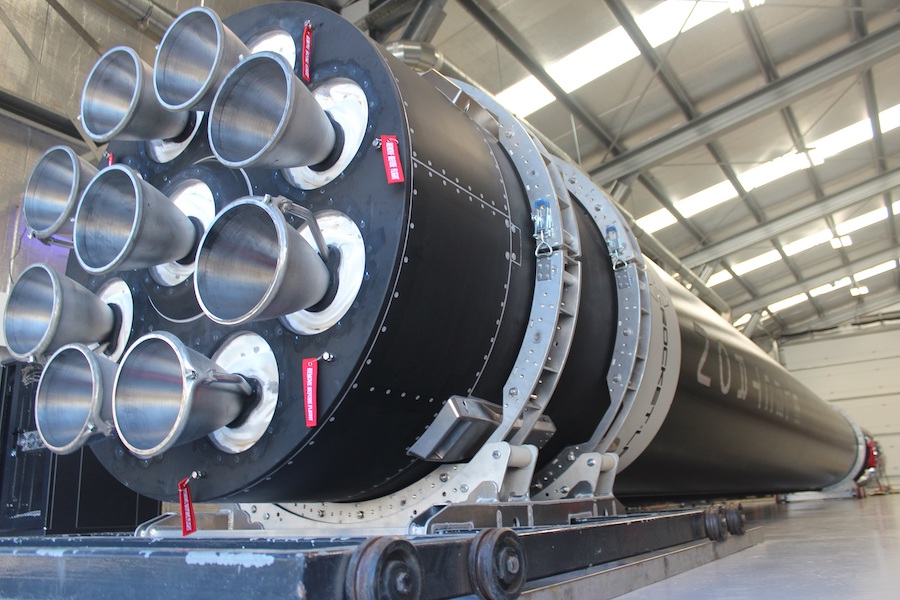
From New Zealand to the US: The Rocket Lab Story
Space5 years ago
Here Is Blue Origin’s Touristic Rocket: The New Shepard Design

Space5 years ago
Take a Look at Earth From Space: Glasgow, Scotland

Engineering5 years ago
NASA Is Preparing Next Generation Spacesuits for Moon Mission and Beyond
Engineering6 years ago
Remote-control cars to race on the Moon in 2021
Engineering6 years ago
Meteorite makes Indonesian man a millionaire as piece crashes through his roof
Engineering6 years ago
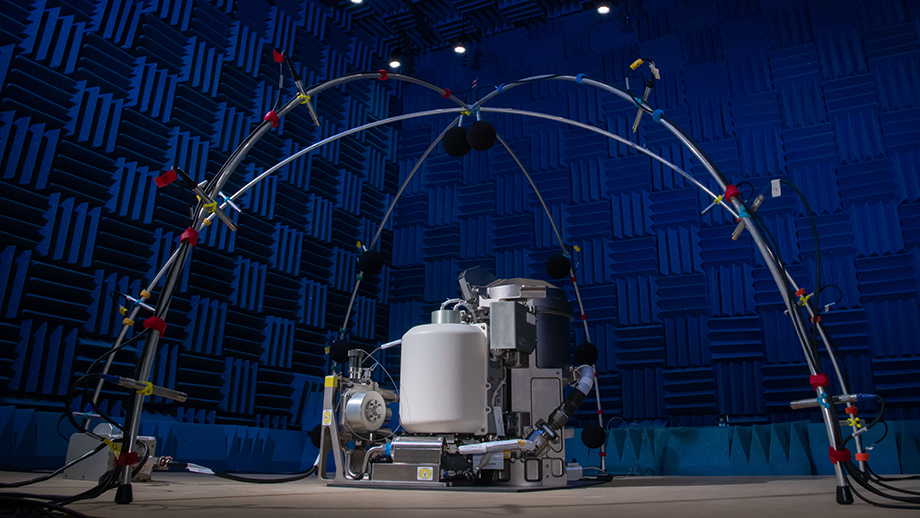
NASA sends a new Space toilet for astronauts to ISS

 Earth & Energy5 years ago
Mariana Trench: 8 Fascinating Facts About the Earth’s Deepest Place

 Space6 years ago
10 most famous scientists who contributed to astronomy and space
- Skywatching6 years ago
Top 25 extremely stunning photos of Northern Lights of 2020 revealed
- Engineering6 years ago
Meteorite makes Indonesian man a millionaire as piece crashes through his roof

 Science4 years ago
It’s Now Possible to Predict Blood Cancer With Ten-Second Videos
 Engineering5 years ago
This Inexpensive Method Speeds up Analysis of 3D Printed Metal Parts
- Infographic6 years ago
SpaceX Dragon: A Game Changer for NASA

 Earth & Energy3 years ago
Tiny fish, big boom: This small fish found to roar like a gunshot