
Engineering
China and Russia announce plan to build lunar space station
The two space powers’ plan to create the space station rivals NASA’s Gateway.

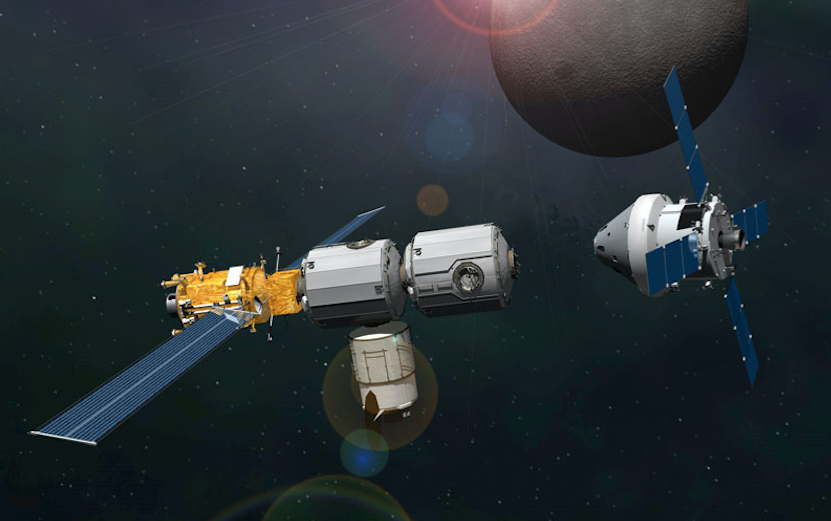
NASA’s deep space exploration plan, the Gateway, has a new rival as China and Russia have signed an agreement to build a lunar space station.
On March 9, Russian space agency Roscosmos and China’s National Space Administration (CNSA) reached the agreement to construct the International Lunar Research Station (ILRS) “on the lunar surface and/or on the lunar orbit.”
Following the gigantic scientific collaboration, the CNSA, for its part, said the lunar space station will be “open to all interested countries and international partners.” The project would “promote humanity’s exploration and use of outer space for peaceful purpose,” it said in a statement.
No ‘exact date’ for when the lunar space station’s construction will start
“Within the framework of creation of the ILRS, China and Russia will use their experience in space science, research and development, and use of space equipment and technology to jointly formulate a road map for the construction of the ILRS,” the statement read. Neither country provided information on when construction would begin.
Russia, then the Soviet Union, put the first human-made satellite into Earth’s orbit in 1957, followed by the first human, Yuri Gagarin, being to travel into space in 1961.
But Moscow has lagged behind both United States and China, following the Soviet era. It has lost its long-held monopoly as the only country able to carry astronauts to the International Space Station (ISS) after succesful manned launch by Elon Musk’s company SpaceX.

Beijing, meanwhile, has launched its space program, putting Tianwen-1 probe into orbit around Mars and has retrieved rock and soil samples from the Moon. A Chinese rover also landed on the far side of the Moon.
With the goal of returning humans to the Moon by 2024, NASA has selected SpaceX to deliver the first two segments of the moon-orbiting Gateway space station through the Artemis program created under the Trump administration, per Space.com.
“The Gateway will be an outpost orbiting the Moon that provides vital support for a sustainable, long-term human return to the lunar surface, as well as a staging point for deep space exploration,” describes NASA.
NASA and Russia’s Roscosmos are collaborating on the ISS, but the latter has been reluctant to continue the space cooperation with the US-based space agency as part of the Moon program, said The Verge.
“While Roscosmos has informed NASA that it does not wish to be part of the Gateway partnership at this time, they did offer to continue exploring interoperability and we welcome such a discussion,” NASA spokeswoman Monica Witt explained.
As for China, it is staying in touch with Paris in the field of space science as France’s space agency CNES President Jean-Yves Le Gall held a videoconference meeting with Zhang Kejian, Administrator of the CNSA, to assess “the bilateral space cooperation between the two agencies, which encompasses Earth observation, universe sciences and space exploration.”
“Other potential areas for cooperation in relation to the Moon and Mars were also discussed during today’s meeting,” the statement added.

Mariana Trench: 8 Fascinating Facts About the Earth’s Deepest Place
10 most famous scientists who contributed to astronomy and space

Top 25 extremely stunning photos of Northern Lights of 2020 revealed

Meteorite makes Indonesian man a millionaire as piece crashes through his roof

It’s Now Possible to Predict Blood Cancer With Ten-Second Videos

This Inexpensive Method Speeds up Analysis of 3D Printed Metal Parts

SpaceX Dragon: A Game Changer for NASA

Tiny fish, big boom: This small fish found to roar like a gunshot

Turkish city unveils design of Mars Colony project for tourists

Researchers Reveal the Source of the Electron Rain Phenomenon

A New Study Reveals How Climate Change Will Affect Sound Travels Underwater
Here Are 6 Space Technologies We Can Benefit to Improve Life on Earth
SpaceX Announced Crew Dragon Will No Longer Be Produced
Russia Warns Sanctions on Moscow Could Endanger the ISS

A New Study Reveals How to Make Walking Easier

Remote-control cars to race on the Moon in 2021

Space Debris Problem Is Getting Worse: Causes and Removal Efforts of Rambling Junk

Microplastic Pollution Detected in Human Blood for the First Time

Nvidia CEO declares coding’s end in AI era
Here Is Blue Origin’s Touristic Rocket: The New Shepard Design

The Fastest Manned Plane in the World: Here’s The Insane Engineering of the X-15
Here Are 6 Space Technologies We Can Benefit to Improve Life on Earth
Pentagon Formed A New Group To Investigate UFO Reports
Space Debris Problem Is Getting Worse: Causes and Removal Efforts of Rambling Junk
From New Zealand to the US: The Rocket Lab Story
Here Is Blue Origin’s Touristic Rocket: The New Shepard Design

Take a Look at Earth From Space: Glasgow, Scotland
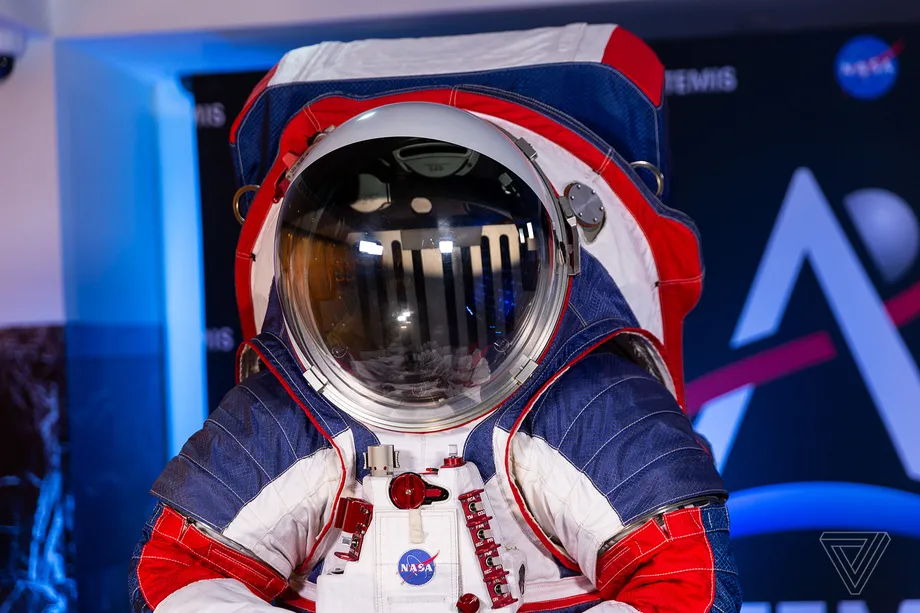
NASA Is Preparing Next Generation Spacesuits for Moon Mission and Beyond
Remote-control cars to race on the Moon in 2021
Meteorite makes Indonesian man a millionaire as piece crashes through his roof
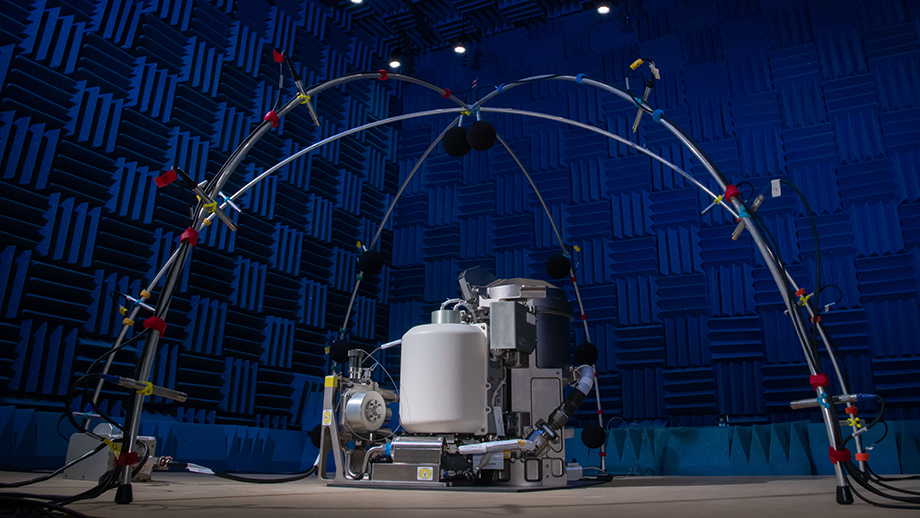
NASA sends a new Space toilet for astronauts to ISS

 Earth & Energy5 years ago
Mariana Trench: 8 Fascinating Facts About the Earth’s Deepest Place

 Space6 years ago
10 most famous scientists who contributed to astronomy and space
- Skywatching6 years ago
Top 25 extremely stunning photos of Northern Lights of 2020 revealed
- Engineering6 years ago
Meteorite makes Indonesian man a millionaire as piece crashes through his roof

 Science5 years ago
It’s Now Possible to Predict Blood Cancer With Ten-Second Videos
 Engineering5 years ago
This Inexpensive Method Speeds up Analysis of 3D Printed Metal Parts
- Infographic6 years ago
SpaceX Dragon: A Game Changer for NASA

 Earth & Energy3 years ago
Tiny fish, big boom: This small fish found to roar like a gunshot