
Space
Cosmic Dance: Two Black Holes Are Heading Towards a Massive Collision
The collision is expected to shake space and time.

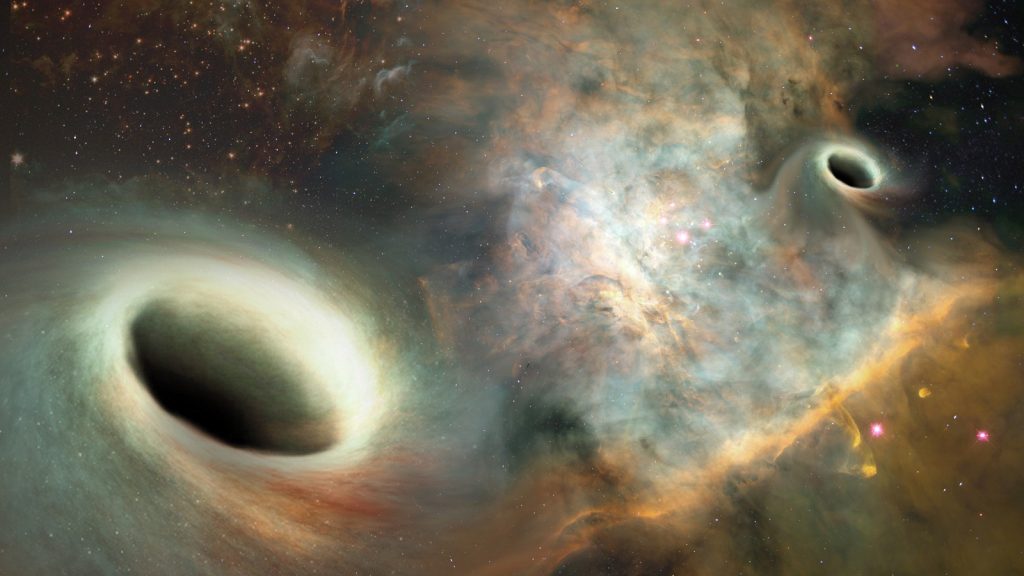
According to the research published in the Astrophysical Journal Letters, a team of scientists observed that the two massive black holes are gravitationally locked together and heading towards collision.
The research identified two supermassive black holes, each with mass hundreds of millions of times the Sun, and observed that the two were only about 2,000 Earth-Sun distances from each other (or 50 times the distance between the Sun and Pluto).
Collision by the black holes will send gravitational waves
“Once this supermassive binary merges in 10,000 years, the massive collision is expected to shake space and time and send gravitational waves throughout the universe,” the California Institute of Technology said in a statement.
Galaxies, including our own Milky Way, have massive black holes at their centers. When galaxies merge, their own black hole tends to sink into the middle of the new super galaxy, creating a new merged, supermassive black hole.
The effects of such mergers create large ripples in space and time known as gravitational waves. Gravitational waves have been observed multiple times using the National Science Foundation’s LIGO (Laser Interferometer Gravitational-Wave Observatory), jointly managed by Caltech and the Massachusetts Institute of Technology.
However, supermassive black holes will not be visible to LIGO because black holes produce lower frequencies of gravitational waves that cannot be detected in LIGO’s sensors. Caltech researchers say the way to capture this in the future will be to use pulsar timing arrays, referring to radio telescopes looking at flashing stars called pulsars, according to the statement. Meanwhile, light waves can show supermassive black holes in motion.
The statement also said the study, described as the most tightly knit supermassive black hole binary ever observed, provides a unique laboratory for understanding the dynamics of a quasar called PKS 2131-021.
A quasar is a celestial body with extreme brightness and mass. The amount of energy and light it emits is so great that this amount of energy could be greater than the energy emitted by all the stars in a galaxy. Astronomers are interested in these super-bright objects in part because quasars can offer insight into the physics of the early universe.
Researchers in this study used 45 years of observations from multiple radio observatories to capture a powerful jet in motion within PKS 2131-021. These movements cause changes in the brightness of radio waves observed on Earth.
“We knew something very special was going on when we realized that the peaks and troughs of the recently detected light curve matched the peaks and troughs observed between 1975 and 1983,” said Sandra O’Neill, lead author of the new study.
Black holes play an important role in the universe. To learn what makes these mysterious objects important, you can read this piece.

Mariana Trench: 8 Fascinating Facts About the Earth’s Deepest Place

10 most famous scientists who contributed to astronomy and space

Top 25 extremely stunning photos of Northern Lights of 2020 revealed

Meteorite makes Indonesian man a millionaire as piece crashes through his roof
It’s Now Possible to Predict Blood Cancer With Ten-Second Videos

This Inexpensive Method Speeds up Analysis of 3D Printed Metal Parts

SpaceX Dragon: A Game Changer for NASA
Tiny fish, big boom: This small fish found to roar like a gunshot

Turkish city unveils design of Mars Colony project for tourists

Researchers Reveal the Source of the Electron Rain Phenomenon

A New Study Reveals How Climate Change Will Affect Sound Travels Underwater
Here Are 6 Space Technologies We Can Benefit to Improve Life on Earth
SpaceX Announced Crew Dragon Will No Longer Be Produced
Russia Warns Sanctions on Moscow Could Endanger the ISS
A New Study Reveals How to Make Walking Easier

Remote-control cars to race on the Moon in 2021
Space Debris Problem Is Getting Worse: Causes and Removal Efforts of Rambling Junk

Microplastic Pollution Detected in Human Blood for the First Time

Nvidia CEO declares coding’s end in AI era

Here Is Blue Origin’s Touristic Rocket: The New Shepard Design

The Fastest Manned Plane in the World: Here’s The Insane Engineering of the X-15
Here Are 6 Space Technologies We Can Benefit to Improve Life on Earth
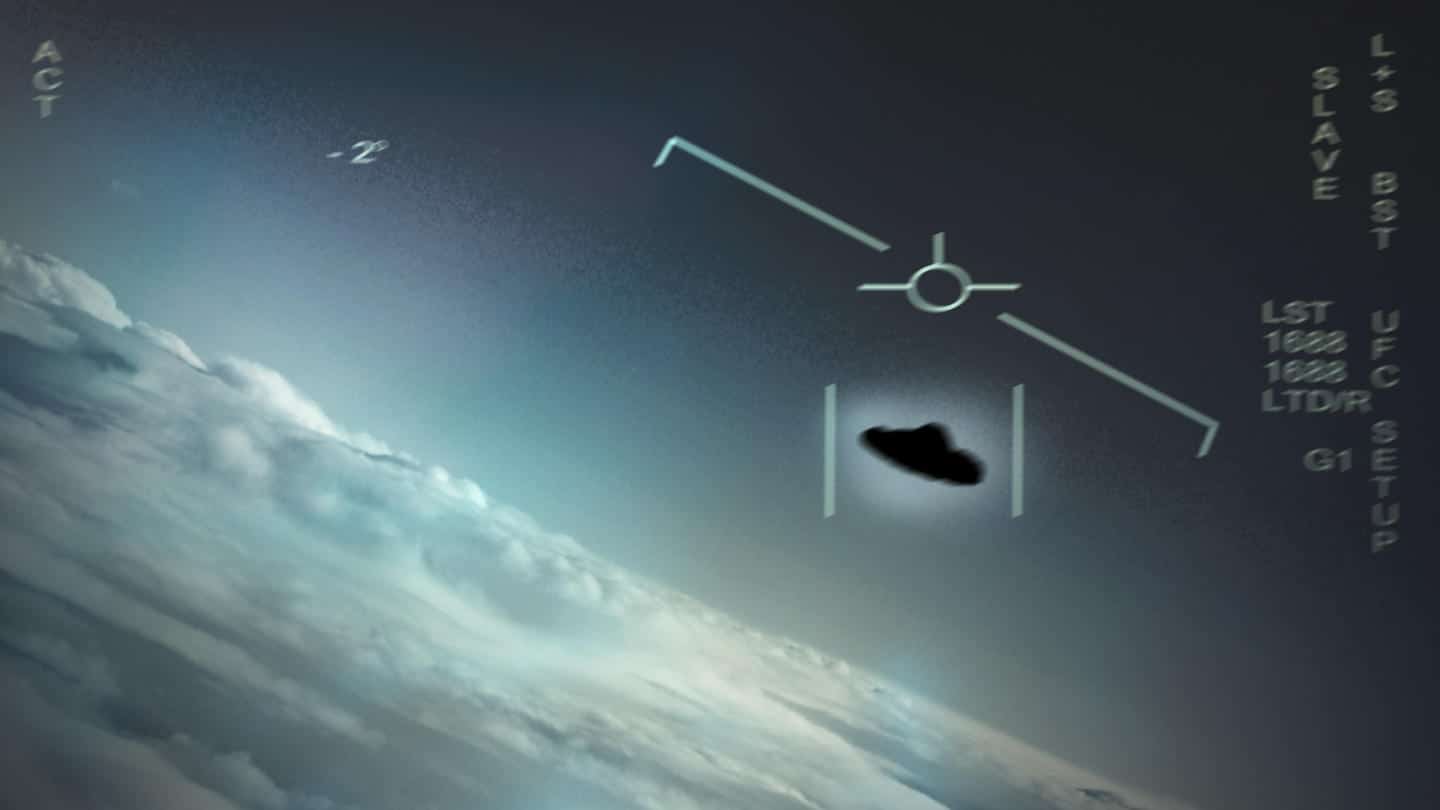
Pentagon Formed A New Group To Investigate UFO Reports
Space Debris Problem Is Getting Worse: Causes and Removal Efforts of Rambling Junk
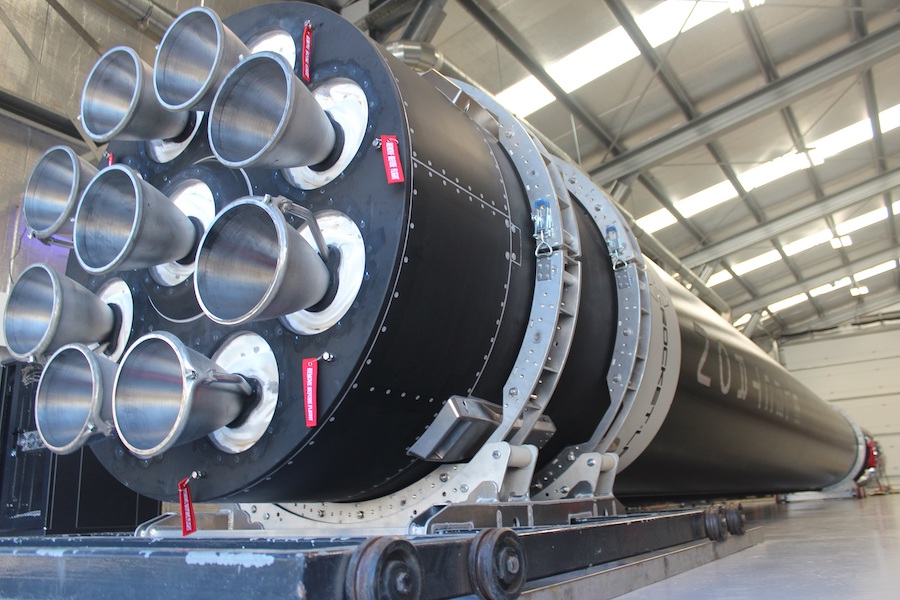
From New Zealand to the US: The Rocket Lab Story
Here Is Blue Origin’s Touristic Rocket: The New Shepard Design

Take a Look at Earth From Space: Glasgow, Scotland

NASA Is Preparing Next Generation Spacesuits for Moon Mission and Beyond
Remote-control cars to race on the Moon in 2021
Meteorite makes Indonesian man a millionaire as piece crashes through his roof
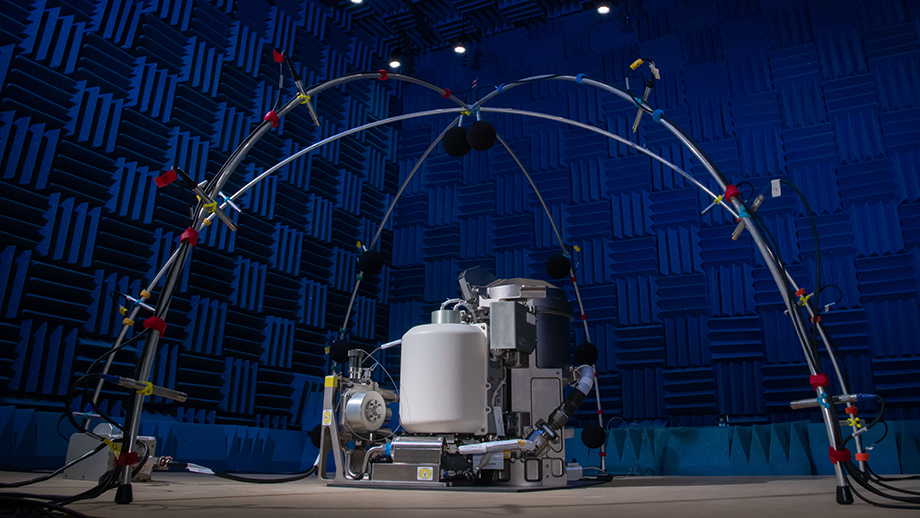
NASA sends a new Space toilet for astronauts to ISS

 Earth & Energy5 years ago
Mariana Trench: 8 Fascinating Facts About the Earth’s Deepest Place

 Space6 years ago
10 most famous scientists who contributed to astronomy and space
- Skywatching6 years ago
Top 25 extremely stunning photos of Northern Lights of 2020 revealed
- Engineering6 years ago
Meteorite makes Indonesian man a millionaire as piece crashes through his roof

 Science5 years ago
It’s Now Possible to Predict Blood Cancer With Ten-Second Videos
 Engineering5 years ago
This Inexpensive Method Speeds up Analysis of 3D Printed Metal Parts
- Infographic6 years ago
SpaceX Dragon: A Game Changer for NASA

 Earth & Energy3 years ago
Tiny fish, big boom: This small fish found to roar like a gunshot