
Skywatching
The Longest Partial Lunar Eclipse in 580 Years Stuns Skywatchers
Four photos of this stunning event are here.

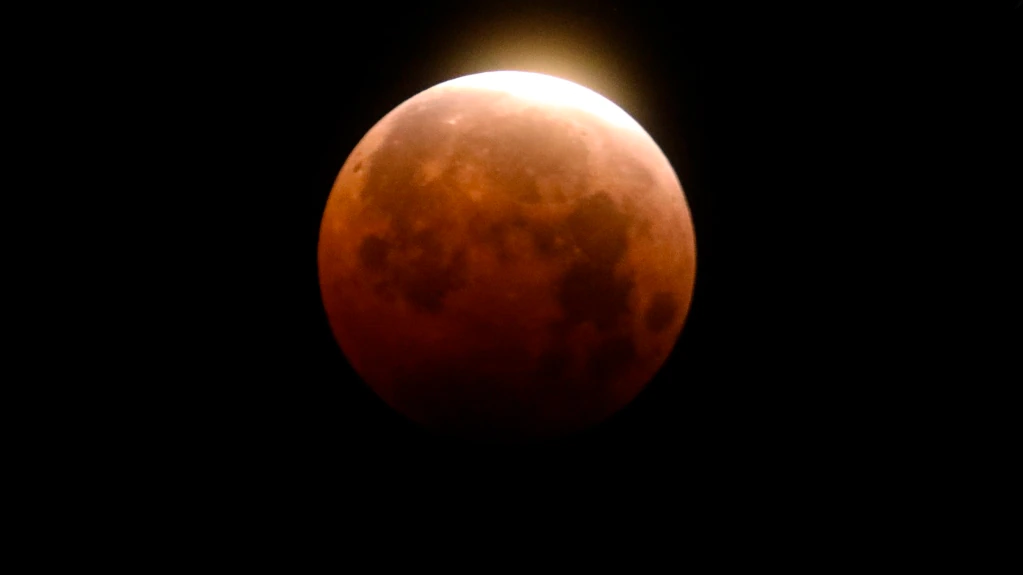
A magnificent event enthralled sky enthusiasts across the globe. The longest partial lunar eclipse happened on Friday when more than 97 percent of the Moon fell into the shadow of Earth, and especially those who live in North America, as well as other places on the planet, were the luckiest to observe it.
The eclipse took place overnight from Nov. 18 to Nov. 19, which lasted 3 hours, 28 minutes and 23 seconds, making it the longest partial lunar eclipse in 580 years. “The Moon will be so close to opposite the Sun on Nov. 19 that it will pass through the southern part of the shadow of the Earth for a nearly total lunar eclipse,” NASA announced before the event.
Four amazing photos from the longest almost total lunar eclipse.⚡#Lunar #Moon #LunarEclipse #LunarEclipse2021 #Space #Astronomy pic.twitter.com/0RRtDYlvBV
— Orbit Inside (@orbitinside) November 19, 2021
A reddish moon during the eclipse
Just a small part of the Moon was visible to us during the eclipse. What made this event dazzling to particularly photographers is that the Moon appeared to be a reddish-brown color.
“The more dust or clouds in Earth’s atmosphere during the eclipse, the redder the Moon will appear,” per the US-based space agency that calls the event “almost total” eclipse. “It’s as if all the world’s sunrises and sunsets are projected onto the Moon.”
| Eclipse Event | EST | CST | MST | PST |
| Penumbra first visible | 1:00 a.m. | 12:00 a.m. | *11:00 p.m. | *10:00 p.m. |
| Partial eclipse begins | 2:18 a.m. | 1:18 a.m. | 12:18 a.m. | *11:18 p.m. |
| Maximum eclipse | 4:03 a.m. | 3:03 a.m. | 2:03 a.m. | 1:03 a.m. |
| Partial eclipse ends | 5:47 a.m. | 4:47 a.m. | 3:47 a.m. | 2:47 a.m. |
| Penumbra last visible | 7:06 a.m. | 6:06 a.m. | 5:06 a.m. | 4:06 a.m. |
*November 18th. The phase times above are indicated for the contiguous US time zones, Alaska Standard Time (AKST), and Hawaii Aleutian Standard Time (HST). Source: EarthSky
Where to watch the longest partial lunar eclipse
Those who live in North America, Alaska, parts of South America, eastern Australia, New Zealand, and Japan had the chance to observe the longest partial lunar eclipse. But people in western Asia, Australia, and New Zealand missed observing the early stages of the eclipse. Moreover, it was impossible to see the show from Africa and the Middle East, according to EarthSky.
“For U.S. East Coast observers, the partial eclipse begins a little after 2 a.m., reaching its maximum at 4 in the morning,” NASA reminded. “For observers on the West Coast, that translates to beginning just after 11 p.m., with a maximum at 1 a.m.”
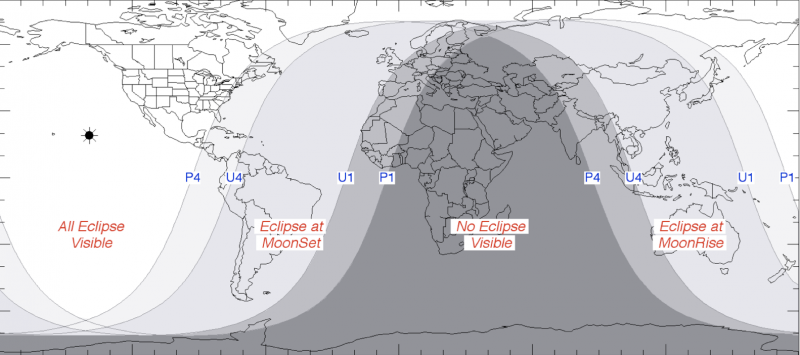
F. Espenak. Royal Astronomical Society of Canada
How to observe it
To bear witness the visual feast, the simple thing you could do was to go outside and look up at the sky. You might have a better view through the equipment including a pair of binoculars or a camera with a tripod.
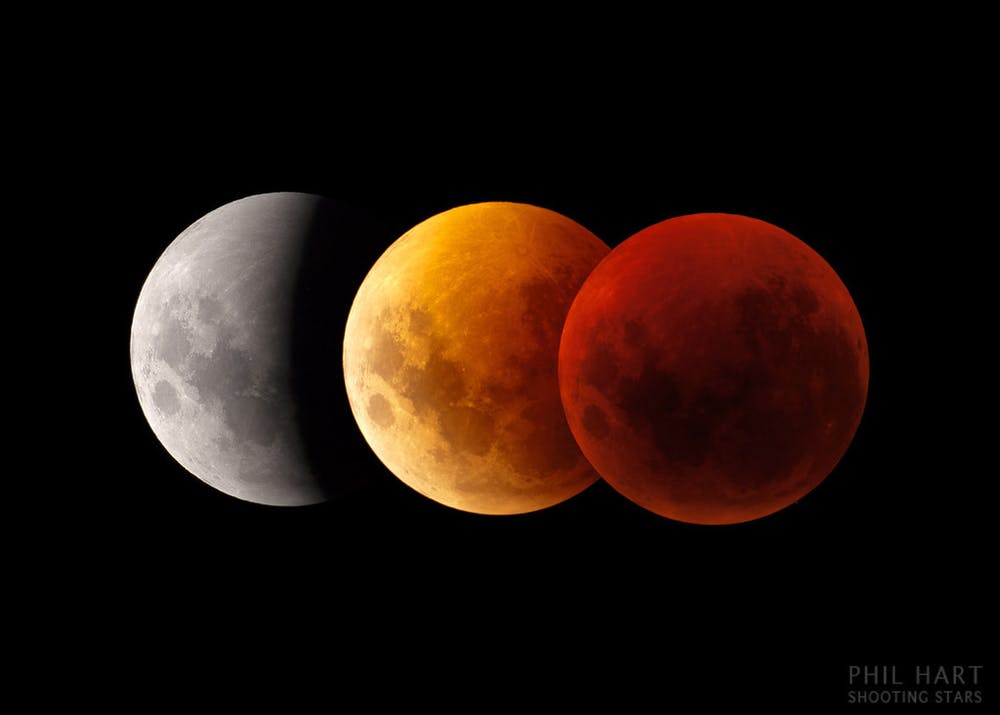
What is a nearly total lunar eclipse?
A lunar eclipse takes place when the Sun, Earth, and the Moon line up, and the Moon passes into Earth’s shadow to stay in the dark. There is also a total lunar eclipse that happens when the Moon entirely falls within the darkness of Earth’s shadow, which is dubbed umbra. To learn more about how to photograph a lunar eclipse, you can watch the embedded video below by the European Space Agency.
WATCH: How to photograph a lunar eclipse

Mariana Trench: 8 Fascinating Facts About the Earth’s Deepest Place
10 most famous scientists who contributed to astronomy and space

Top 25 extremely stunning photos of Northern Lights of 2020 revealed

Meteorite makes Indonesian man a millionaire as piece crashes through his roof

It’s Now Possible to Predict Blood Cancer With Ten-Second Videos

This Inexpensive Method Speeds up Analysis of 3D Printed Metal Parts

SpaceX Dragon: A Game Changer for NASA
Tiny fish, big boom: This small fish found to roar like a gunshot

Turkish city unveils design of Mars Colony project for tourists

Researchers Reveal the Source of the Electron Rain Phenomenon

A New Study Reveals How Climate Change Will Affect Sound Travels Underwater
Here Are 6 Space Technologies We Can Benefit to Improve Life on Earth
SpaceX Announced Crew Dragon Will No Longer Be Produced
Russia Warns Sanctions on Moscow Could Endanger the ISS

A New Study Reveals How to Make Walking Easier

Remote-control cars to race on the Moon in 2021

Space Debris Problem Is Getting Worse: Causes and Removal Efforts of Rambling Junk

Microplastic Pollution Detected in Human Blood for the First Time

Nvidia CEO declares coding’s end in AI era

Here Is Blue Origin’s Touristic Rocket: The New Shepard Design

The Fastest Manned Plane in the World: Here’s The Insane Engineering of the X-15
Here Are 6 Space Technologies We Can Benefit to Improve Life on Earth
Pentagon Formed A New Group To Investigate UFO Reports
Space Debris Problem Is Getting Worse: Causes and Removal Efforts of Rambling Junk
From New Zealand to the US: The Rocket Lab Story
Here Is Blue Origin’s Touristic Rocket: The New Shepard Design
Take a Look at Earth From Space: Glasgow, Scotland

NASA Is Preparing Next Generation Spacesuits for Moon Mission and Beyond
Remote-control cars to race on the Moon in 2021
Meteorite makes Indonesian man a millionaire as piece crashes through his roof
NASA sends a new Space toilet for astronauts to ISS

 Earth & Energy5 years ago
Mariana Trench: 8 Fascinating Facts About the Earth’s Deepest Place

 Space6 years ago
10 most famous scientists who contributed to astronomy and space
- Skywatching6 years ago
Top 25 extremely stunning photos of Northern Lights of 2020 revealed
- Engineering6 years ago
Meteorite makes Indonesian man a millionaire as piece crashes through his roof

 Science5 years ago
It’s Now Possible to Predict Blood Cancer With Ten-Second Videos
 Engineering5 years ago
This Inexpensive Method Speeds up Analysis of 3D Printed Metal Parts
- Infographic6 years ago
SpaceX Dragon: A Game Changer for NASA

 Earth & Energy3 years ago
Tiny fish, big boom: This small fish found to roar like a gunshot