
Engineering
NASA Postpones Landing of Humans on the Moon Surface to 2025
Previously scheduled for 2024, NASA stated the goal of putting humans on the Moon would be no earlier than 2025.

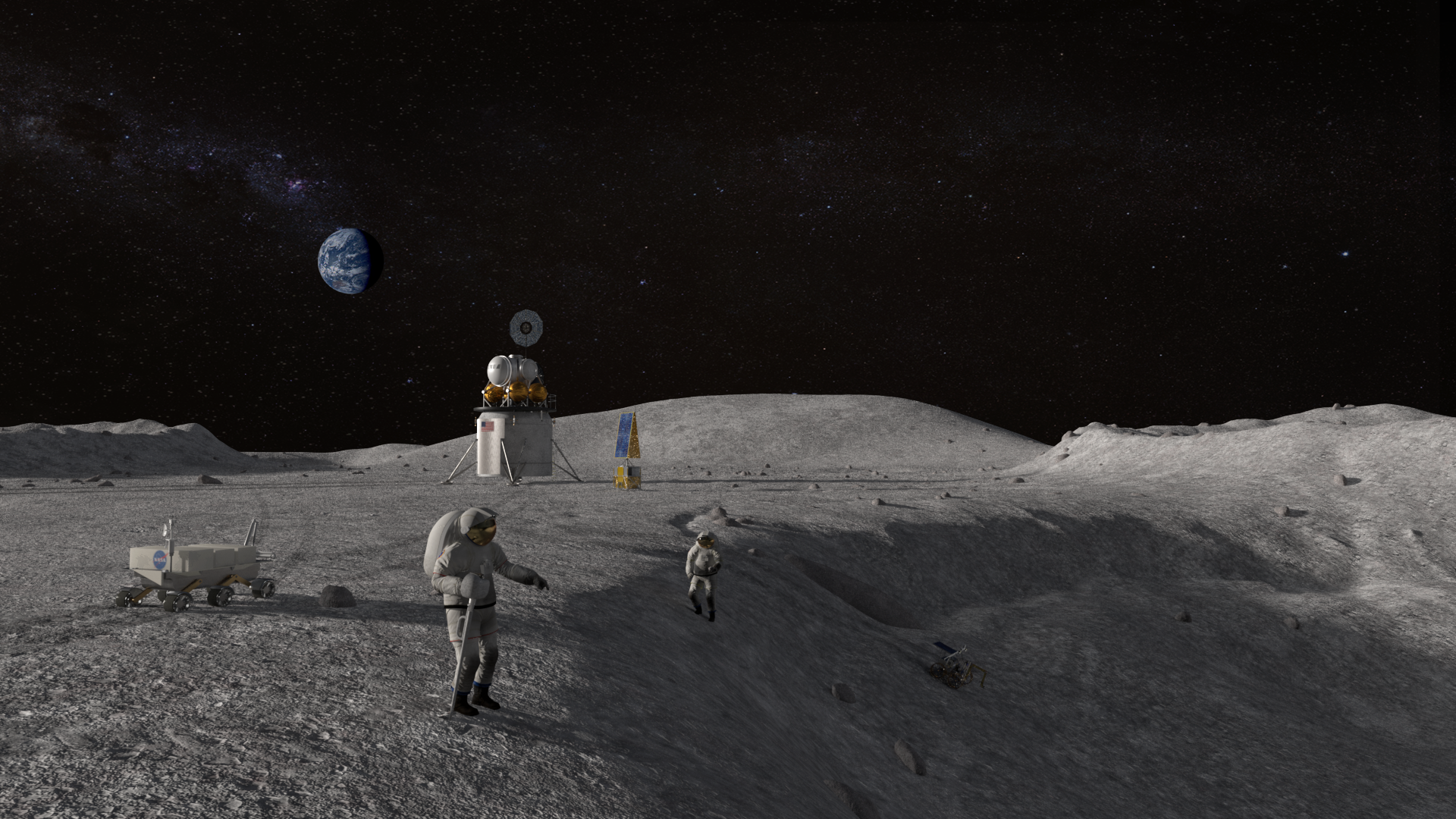
The timeline of returning humans to the lunar surface has shifted to be somewhat delayed. The Moon landing delay is due to several factors, including the COVID-19 pandemic, the technical and budget issues, and Blue Origin’s lawsuit.
In the latest update by NASA administrator Bill Nelson concerning the Artemis program, the launch of Artemis 1 for the first flight test has no change in schedule, which is in February 2022. As for Artemis 2, a test flight sending astronauts around the Moon follows in May 2024. Meanwhile, Artemis 3, the first crewed Moon landing of the program, will be no earlier than 2025.
NASA’s explanation on the Moon landing delay
The Trump administration proposed a target to NASA for the Artemis’ crewed flight mission to be executed in 2024. Unfortunately, some challenges, such as the pandemic of COVID-19 and a lawsuit lodged by Blue Origin, had put the program into a delay.
After attempting to accomplish the program’s execution by the year 2024, the development of the crewed landing equipment had to be halted. Nelson finally announced that the US agency for the space program set a new timeline for their third planned flight of the Artemis program.
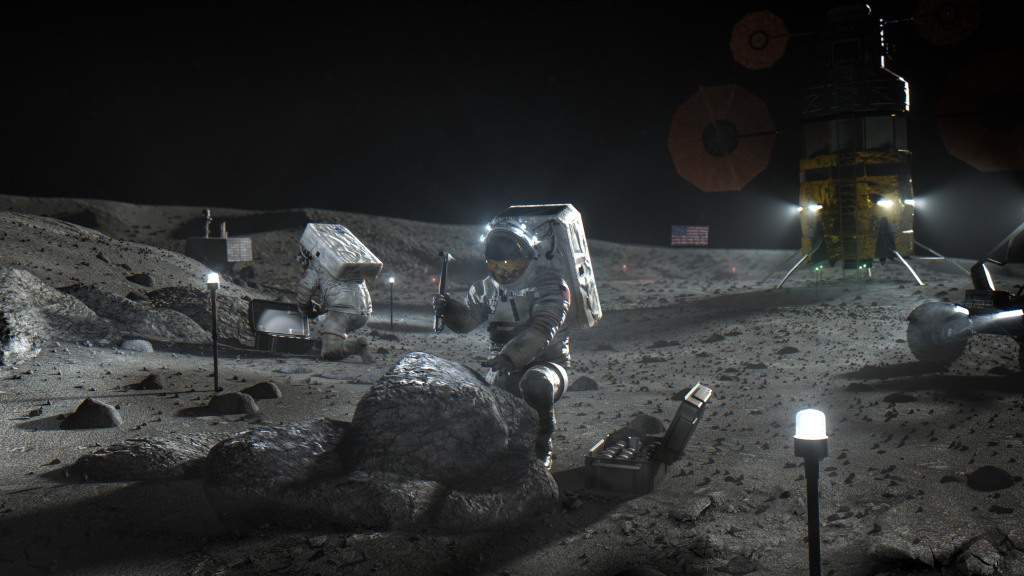
NASA
Nelson said, “The Trump administration’s target of a 2024 human landing was not grounded in technical feasibility.” He then added, “We’ve lost nearly seven months in litigation and that likely has pushed the first human landing to no earlier than 2025.”
Apart from the pandemic that drove obstacles in almost all activities around the globe, the federal lawsuit lodged by Blue Origin froze all joint development on the lunar lander. The issue began when NASA awarded SpaceX the contract of the Human Landing System (HLS) to develop the next lunar lander for NASA. The competitor of the contract, Blue Origin, issued an open letter for official complaints and made a federal lawsuit against NASA.
After Blue Origin’s case was closed with the announcement of the company’s defeat in the lawsuit on 4th November, NASA can now collaborate again with SpaceX and proceed with the lunar lander development. Nelson finally got to communicate again with the CEO of SpaceX after the lawsuit, discussing the HLS program.
They both highlighted the importance of landing back on the Moon as soon and safe as possible. Nelson also publicly stated that the court’s decision indicates the Artemis program is moving forward, despite the Moon landing delay.
[irp posts=”2264″ name=”NASA Telescope Identified the First Planet Candidate Outside Our Galaxy”]
Budget issues to think about
Another challenge in carrying out this Artemis mission is the cost increase. The first is that, as a result of the Artemis program’s delay, the budget for the development of Orion spacecraft, which will be used to send humans beyond the Moon further than before, would raise.
The administrator of the US space agency said, “NASA is committed to an updated Orion development cost of $9.3 billion from the fiscal year 2012 through the first crewed flight test no later than May 2024.” This amount differs from the prior agency baseline commitment of $6.7 billion, according to the deputy administrator, Pam Melroy.
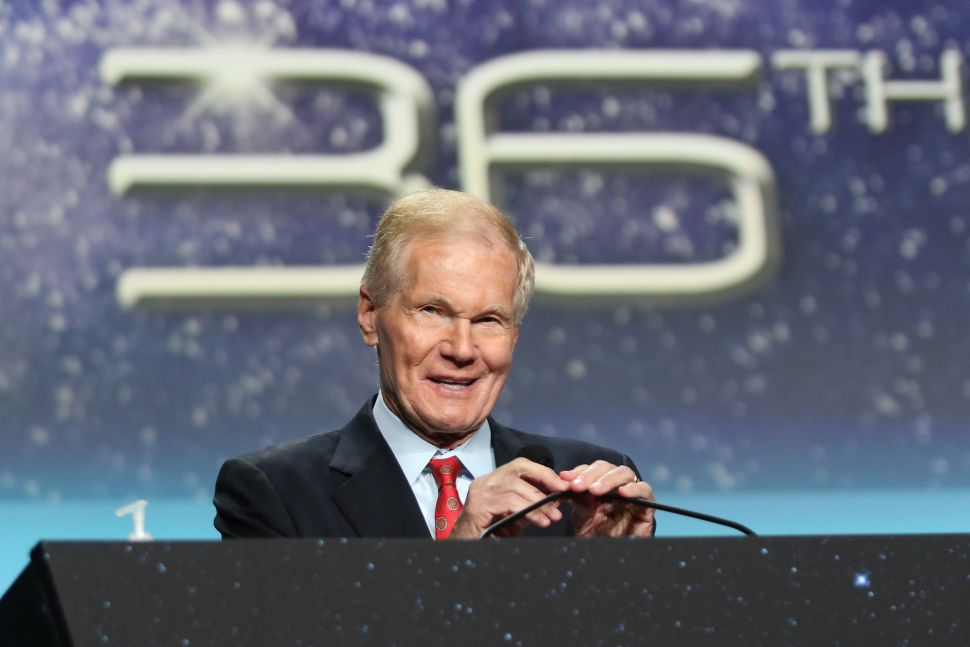
NASA administrator Bill Nelson. Space Foundation
The second point is that there must be competition for Moon landings in the future. Not only is there rivalry among US corporations, but there is also international competition from China, which is ambitious in its space program.
With the stance of NASA wanting to be the first to successfully land on the Moon, then financial support is no less important. Nelson addressed this issue as reported in space.com, “There will be the need of a significant increase in funding for the competition. And that’s going to be starting with the 2023 budget.”
“I have not been shy about stating this. And I’ve stated it publicly several times,” he added.
WATCH: Restored Apollo 11 Moonwalk

Mariana Trench: 8 Fascinating Facts About the Earth’s Deepest Place

10 most famous scientists who contributed to astronomy and space

Top 25 extremely stunning photos of Northern Lights of 2020 revealed

Meteorite makes Indonesian man a millionaire as piece crashes through his roof

It’s Now Possible to Predict Blood Cancer With Ten-Second Videos

This Inexpensive Method Speeds up Analysis of 3D Printed Metal Parts

SpaceX Dragon: A Game Changer for NASA
Tiny fish, big boom: This small fish found to roar like a gunshot

Turkish city unveils design of Mars Colony project for tourists

Researchers Reveal the Source of the Electron Rain Phenomenon
A New Study Reveals How Climate Change Will Affect Sound Travels Underwater
Here Are 6 Space Technologies We Can Benefit to Improve Life on Earth
SpaceX Announced Crew Dragon Will No Longer Be Produced
Russia Warns Sanctions on Moscow Could Endanger the ISS

A New Study Reveals How to Make Walking Easier

Remote-control cars to race on the Moon in 2021
Space Debris Problem Is Getting Worse: Causes and Removal Efforts of Rambling Junk

Microplastic Pollution Detected in Human Blood for the First Time

Nvidia CEO declares coding’s end in AI era
Here Is Blue Origin’s Touristic Rocket: The New Shepard Design
The Fastest Manned Plane in the World: Here’s The Insane Engineering of the X-15
Here Are 6 Space Technologies We Can Benefit to Improve Life on Earth
Pentagon Formed A New Group To Investigate UFO Reports
Space Debris Problem Is Getting Worse: Causes and Removal Efforts of Rambling Junk
From New Zealand to the US: The Rocket Lab Story
Here Is Blue Origin’s Touristic Rocket: The New Shepard Design

Take a Look at Earth From Space: Glasgow, Scotland
NASA Is Preparing Next Generation Spacesuits for Moon Mission and Beyond
Remote-control cars to race on the Moon in 2021
Meteorite makes Indonesian man a millionaire as piece crashes through his roof
NASA sends a new Space toilet for astronauts to ISS

 Earth & Energy5 years ago
Mariana Trench: 8 Fascinating Facts About the Earth’s Deepest Place

 Space6 years ago
10 most famous scientists who contributed to astronomy and space
- Skywatching6 years ago
Top 25 extremely stunning photos of Northern Lights of 2020 revealed
- Engineering6 years ago
Meteorite makes Indonesian man a millionaire as piece crashes through his roof

 Science5 years ago
It’s Now Possible to Predict Blood Cancer With Ten-Second Videos
 Engineering5 years ago
This Inexpensive Method Speeds up Analysis of 3D Printed Metal Parts
- Infographic6 years ago
SpaceX Dragon: A Game Changer for NASA

 Earth & Energy3 years ago
Tiny fish, big boom: This small fish found to roar like a gunshot