
Space
Japan Is Preparing to Launch Its First Wooden Satellite in 2023
The first environmentally friendly satellite will be set in motion in space next year.

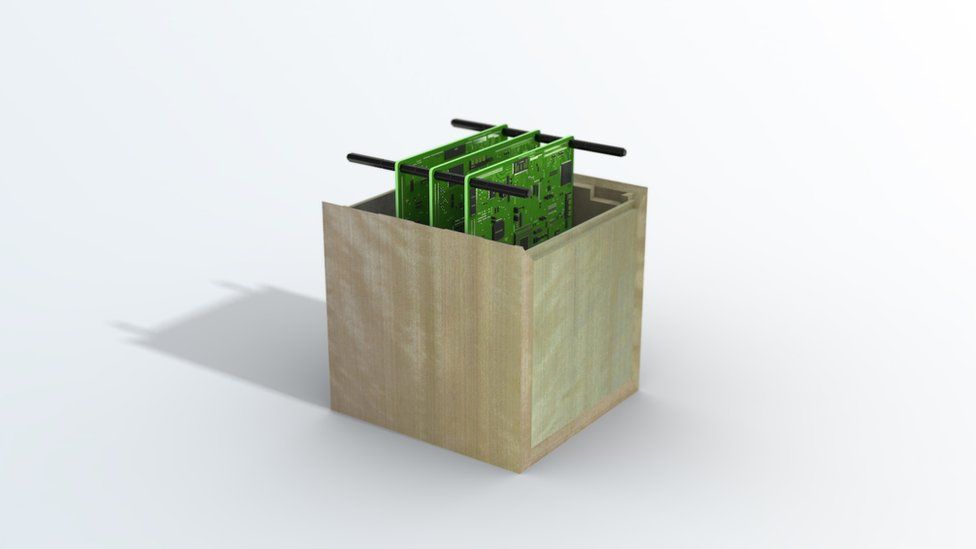
Over decades, the space-related activities of satellite launch histories have cast aluminum into space due to the most used material to construct satellites. Despite its high cost, aluminum was selected for its fine durability in the space environment. However, some Japanese scientists from Kyoto University and Sumitomo Forestry Co. proposed a novel idea of developing a wooden satellite. As the name implies, the satellite will be made of wood.
These scientists from the “Land of the Rising Sun” have their own concerns regarding the aluminum satellites; the hazardous environmental effects and the high cost. According to scientists, the wooden satellite will have a less harmful impact on the environment. Cost-wise, the planned satellite will also be more efficient. Japan aims to release the satellite into space next year, by 2023.
Material Feasibility Test for Wooden Satellite
Before the satellite’s initial flight in 2023, given that the satellite is composed of wood, a state university in western Japan and a wood products company in Tokyo sought to test the endurance of wood in space starting in February.
Led by an astronaut from Japan Aerospace Exploration Agency, Takao Doi, the team will conduct the test using a piece of extravehicular experimental equipment from the International Space Station (ISS). They will attach wooden sheets to the equipment and subject them to space conditions for about nine months.
The hardness of the woods used in this experiment varies as they are collected from different tree species, including Japanese bigleaf magnolia, mountain cherry tree, and gold birch. During the nine months, the team will assess the exposed wooden sheets to see if they have deteriorated. It’s because materials in space have their strength decreased to the presence of radiation.
The Feature and Design
Which part of the satellite is made of wood? Engineers disclosed that the exterior would be composed of wood and decorated with solar cells while the interior would hold some electrical items. The wooden satellite will be cube-shaped with sides of 10 centimeters.
According to Kyoto University and Sumitomo Forestry Co. experts, the shell of the wooden satellite will burn up easily when it re-enters Earth’s atmosphere as the service of the satellite terminates. Considering that the burning material is wood, which is a natural substance, it will reduce the harmful impact on the environment.
As per Japan Today, “Because electromagnetic waves can penetrate wood, the satellite can contain an antenna inside.” Thus, the satellite design will be more practical. Doi stated that if the wooden satellite concept is successful, it may encourage children of space enthusiasts to build their own satellites in the future.

Mariana Trench: 8 Fascinating Facts About the Earth’s Deepest Place
10 most famous scientists who contributed to astronomy and space

Top 25 extremely stunning photos of Northern Lights of 2020 revealed

Meteorite makes Indonesian man a millionaire as piece crashes through his roof

It’s Now Possible to Predict Blood Cancer With Ten-Second Videos
This Inexpensive Method Speeds up Analysis of 3D Printed Metal Parts

SpaceX Dragon: A Game Changer for NASA
Tiny fish, big boom: This small fish found to roar like a gunshot

Turkish city unveils design of Mars Colony project for tourists

Researchers Reveal the Source of the Electron Rain Phenomenon
A New Study Reveals How Climate Change Will Affect Sound Travels Underwater
Here Are 6 Space Technologies We Can Benefit to Improve Life on Earth
SpaceX Announced Crew Dragon Will No Longer Be Produced
Russia Warns Sanctions on Moscow Could Endanger the ISS

A New Study Reveals How to Make Walking Easier

Remote-control cars to race on the Moon in 2021

Space Debris Problem Is Getting Worse: Causes and Removal Efforts of Rambling Junk

Microplastic Pollution Detected in Human Blood for the First Time

Nvidia CEO declares coding’s end in AI era

Here Is Blue Origin’s Touristic Rocket: The New Shepard Design

The Fastest Manned Plane in the World: Here’s The Insane Engineering of the X-15
Here Are 6 Space Technologies We Can Benefit to Improve Life on Earth
Pentagon Formed A New Group To Investigate UFO Reports
Space Debris Problem Is Getting Worse: Causes and Removal Efforts of Rambling Junk
From New Zealand to the US: The Rocket Lab Story
Here Is Blue Origin’s Touristic Rocket: The New Shepard Design

Take a Look at Earth From Space: Glasgow, Scotland

NASA Is Preparing Next Generation Spacesuits for Moon Mission and Beyond
Remote-control cars to race on the Moon in 2021
Meteorite makes Indonesian man a millionaire as piece crashes through his roof
NASA sends a new Space toilet for astronauts to ISS

 Earth & Energy5 years ago
Mariana Trench: 8 Fascinating Facts About the Earth’s Deepest Place

 Space6 years ago
10 most famous scientists who contributed to astronomy and space
- Skywatching6 years ago
Top 25 extremely stunning photos of Northern Lights of 2020 revealed
- Engineering6 years ago
Meteorite makes Indonesian man a millionaire as piece crashes through his roof

 Science5 years ago
It’s Now Possible to Predict Blood Cancer With Ten-Second Videos
 Engineering5 years ago
This Inexpensive Method Speeds up Analysis of 3D Printed Metal Parts
- Infographic6 years ago
SpaceX Dragon: A Game Changer for NASA

 Earth & Energy3 years ago
Tiny fish, big boom: This small fish found to roar like a gunshot