
Earth & Energy
2021 Set a New Record for One of the Hellish Climates
“We are unfortunately, reaping what we have sown,” Gavin Schmidt, director of NASA’s Goddard Institute for Space Studies, uttered.


NASA and the National Oceanic and Atmospheric Administration (NOAA) have confirmed that the last eight years have been the most scorching since records began. The organizations declared 2021 to be the sixth hottest year on record as the global average temperature rose. The ranking identified a series of red-flag conditions across countries as to how extreme the temperatures were during the past year.
The average global temperature throughout 2021 was 1.1 degrees Celsius warmer than it was before the preindustrial era when mankind had not begun spewing massive amounts of carbon dioxide. Carlo Buontempo, Director of the Copernicus Climate Change Service, said in a statement, “These events are a stark reminder of the need to change our ways, take decisive and effective steps towards a sustainable society and work towards reducing net carbon emissions.”
A stack of events in 2021 as the hottest year
The scientific consensus regarding the increase of greenhouse gases in the air, which cause a long-term effect on global warming, aligns with the consistent warm temperatures for the past eight years. The analysis of satellite readings from Copernicus found that the concentrations of heat-trapping gases continually climbed last year, aided by over a thousand megatons of carbon emissions from global wildfires.
“The fact is that we’ve now kind of moved into a new regime. This is likely the warmest decade in many, many hundreds, maybe 1000s of years,” Schmidt shared. “There’s enough change that it’s having impacts locally.”
In Europe, a blistering heat struck Sicily, Italy’s largest island, with a temperature of 48.8 degrees Celsius. It might have broken the record of the European hottest temperature. Across the pond, North America experienced one of the worst summer heats, despite having some chilly regions. Added in June and July, Western Canada and the Pacific Northwest of the US were confronted with record-busting heat that stretched pavements and mollified power cables.
According to NOAA, July 2021 was the hottest month ever recorded. In eastern California, Death Valley, renowned for being one of the most sweltering places on the planet, reported a searing 54.4 degrees Celsius in July. For the second time in a row, it may have smashed the global record for the highest temperature humans have ever recorded on Earth.
Thinking back about climate trends and extremes in 2021, this event still shocks me…
"…found to be virtually impossible without human-caused climate change"
+ Graphic from @BerkeleyEarth: https://t.co/rMGkNduwwj
+ Attribution preprint in @EGU_ESD: https://t.co/dcqchjQgc5 pic.twitter.com/RMiU7mcLRE— Zack Labe (@ZLabe) January 19, 2022
The heatwave wreaked havoc on some communities, causing more than just suffering. It was proven by the high frequency of emergency department visits in the Pacific Northwest in June, as reported by the Centers for Disease Control and Prevention. Weather forecaster, David Roth, told The Verge, “You get acclimated to warm in the summer, but that’s only if you’re used to experiencing those conditions. This could be very unlike any other heatwave they’ve experienced.” The locals were not used to tolerating extreme temperatures.
Moving further to the north, an event of human tragedy – community destruction – in 2021 as the hottest year, occurred in Lytton, British Columbia. A firestorm nearly took out the little hamlet of Lytton, just after it set a record for the hottest temperature in Canada.
Rising temperature problem: The blazing heat reaches into the water, too
The record for the hottest year in 2021 appeared to be set not just on land but also in the ocean. As of last year, it was the sixth consecutive year of the hottest ocean temperatures recorded in history. It is likely to take a toll on marine life and coastal communities as ocean heatwaves are now more prevalent compared to in the early 80s. They have the potential to devastate coral reefs and perhaps cause severe droughts along the coast.
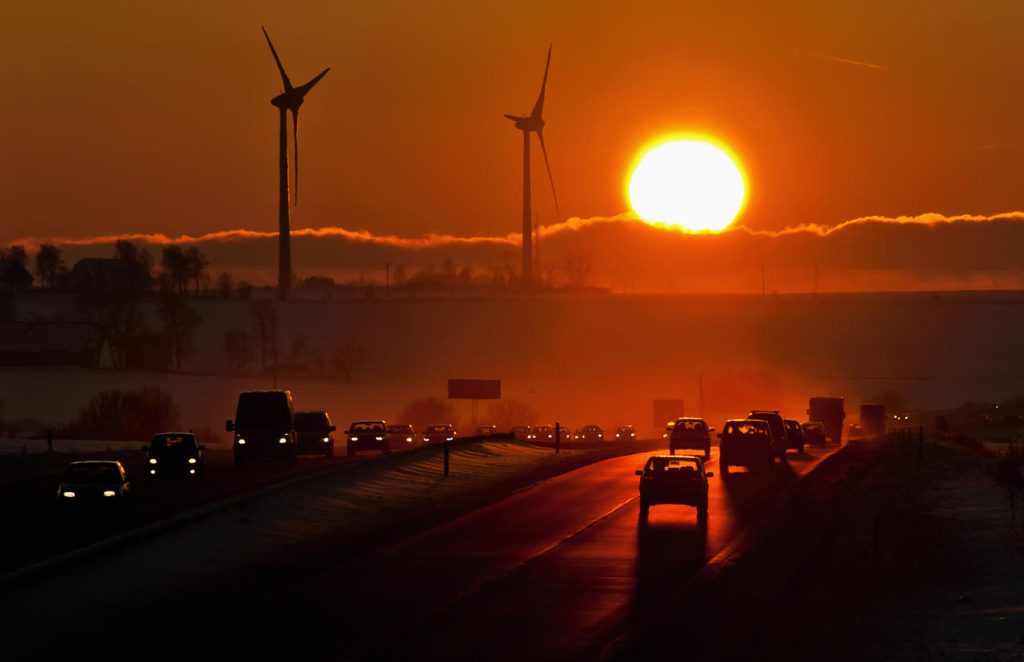
Håkan Jansson/Alamy
The National Center for Atmospheric Research stated that warming oceans contribute to more storms, hurricanes, and extreme rainfall, which is accelerating the potential for serious flooding. As humans continue to emit carbon dioxide, causing global warming, the oceans absorb about a third of the CO2. It leads to the acidification of the world’s oceans, which serve as a habitat for marine life and a source of food for humans.
Despite La Niña, a natural phenomenon that cools the surface temperature of the central and east-central Pacific oceans, 2021 hit the most recent high heat record for the top 2,000 meters of the world’s oceans. The year even saw the hottest temperature since records began back in 1955.
It looks like we are really running towards catastrophic global warming if the effects of greenhouse gases still don’t urge us to make the effort of net-zero emissions. Perhaps there is still hope, and that we may not be running out of time to curb the emissions of greenhouse gases that are getting overwhelming. Putting an end to the burning of fossil fuels in countries around the world will be challenging, but a gradual abatement may probably help. Keep your fingers crossed.

Mariana Trench: 8 Fascinating Facts About the Earth’s Deepest Place

10 most famous scientists who contributed to astronomy and space

Top 25 extremely stunning photos of Northern Lights of 2020 revealed

Meteorite makes Indonesian man a millionaire as piece crashes through his roof

It’s Now Possible to Predict Blood Cancer With Ten-Second Videos

This Inexpensive Method Speeds up Analysis of 3D Printed Metal Parts

SpaceX Dragon: A Game Changer for NASA

Tiny fish, big boom: This small fish found to roar like a gunshot

Turkish city unveils design of Mars Colony project for tourists

Researchers Reveal the Source of the Electron Rain Phenomenon

A New Study Reveals How Climate Change Will Affect Sound Travels Underwater

Here Are 6 Space Technologies We Can Benefit to Improve Life on Earth

SpaceX Announced Crew Dragon Will No Longer Be Produced
Russia Warns Sanctions on Moscow Could Endanger the ISS

A New Study Reveals How to Make Walking Easier

Remote-control cars to race on the Moon in 2021

Space Debris Problem Is Getting Worse: Causes and Removal Efforts of Rambling Junk

Microplastic Pollution Detected in Human Blood for the First Time

Nvidia CEO declares coding’s end in AI era

Here Is Blue Origin’s Touristic Rocket: The New Shepard Design

The Fastest Manned Plane in the World: Here’s The Insane Engineering of the X-15
Here Are 6 Space Technologies We Can Benefit to Improve Life on Earth

Pentagon Formed A New Group To Investigate UFO Reports
Space Debris Problem Is Getting Worse: Causes and Removal Efforts of Rambling Junk

From New Zealand to the US: The Rocket Lab Story
Here Is Blue Origin’s Touristic Rocket: The New Shepard Design
Take a Look at Earth From Space: Glasgow, Scotland

NASA Is Preparing Next Generation Spacesuits for Moon Mission and Beyond
Remote-control cars to race on the Moon in 2021
Meteorite makes Indonesian man a millionaire as piece crashes through his roof

NASA sends a new Space toilet for astronauts to ISS

 Earth & Energy5 years ago
Mariana Trench: 8 Fascinating Facts About the Earth’s Deepest Place

 Space6 years ago
10 most famous scientists who contributed to astronomy and space
- Skywatching6 years ago
Top 25 extremely stunning photos of Northern Lights of 2020 revealed
- Engineering6 years ago
Meteorite makes Indonesian man a millionaire as piece crashes through his roof

 Science5 years ago
It’s Now Possible to Predict Blood Cancer With Ten-Second Videos
 Engineering5 years ago
This Inexpensive Method Speeds up Analysis of 3D Printed Metal Parts
- Infographic6 years ago
SpaceX Dragon: A Game Changer for NASA

 Earth & Energy3 years ago
Tiny fish, big boom: This small fish found to roar like a gunshot