
Earth & Energy
Nanoplastic Pollution Is Found for the First Time at Both of the Earth’s Poles
What’s surprising is not that it was discovered for the first time at the poles, but that it has been contaminating Greenland for the past 50 years.

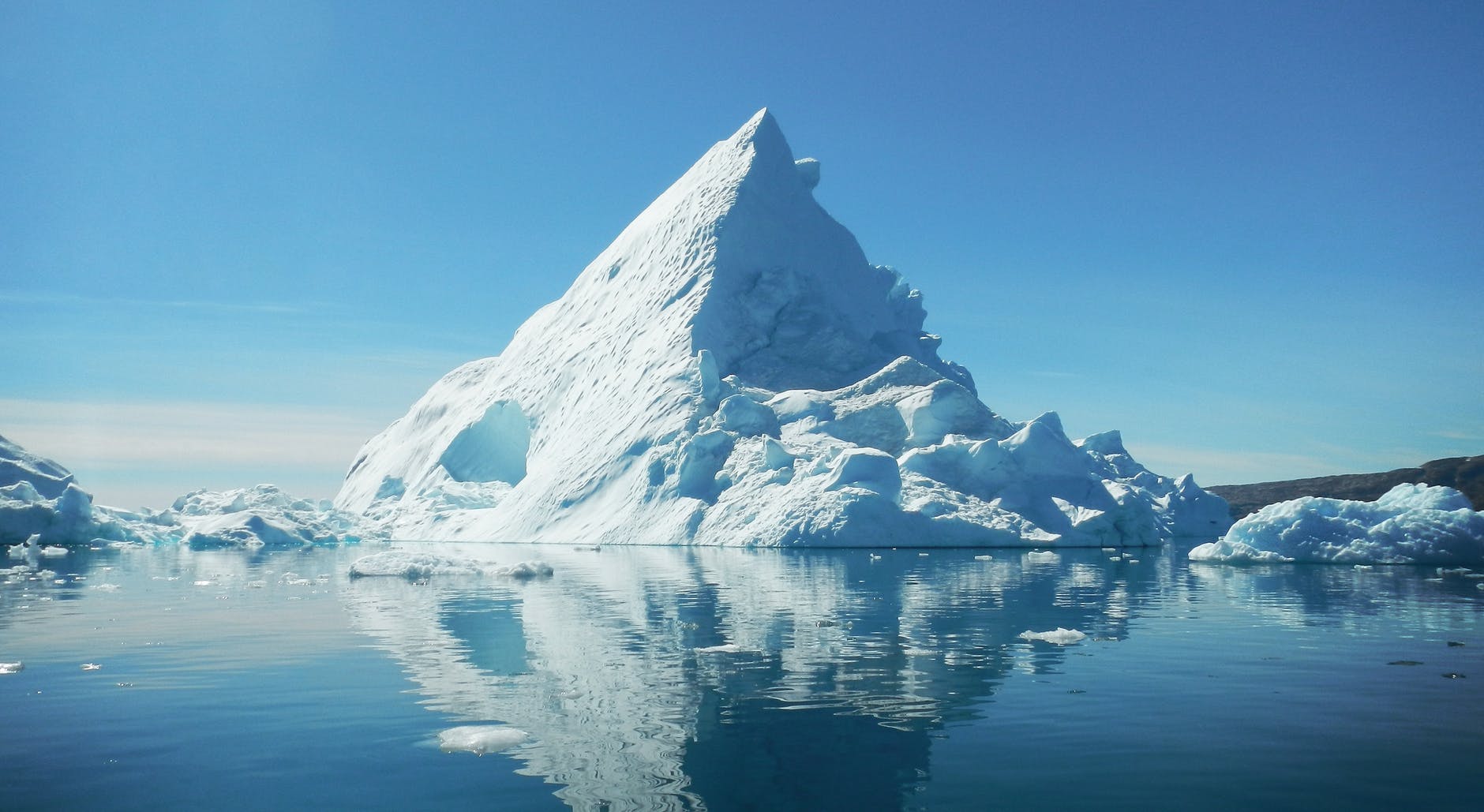
For the first time ever, scientists from Utrecht University discovered nanoplastic pollution at the North and South poles. When scientists learned that hazardous contamination had been poisoning Greenland for 50 years, they assumed it was actually a bigger pollution problem than they had realized. The discovery of the pollution consisting of tire particles is baffling. The nanoparticles are thought to have reached Greenland through the winds from North America and Asia.
Nanoplastics are less dense and more dangerous than microplastics, which have been discovered around the world. Although the effects of both plastics on human health are unknown, researchers are concerned about the long-term implications for humans and animals. Also, plastic pollution in the oceans is anticipated to quadruple by 2040.
What the expert says about nanoplastic pollution
Research led by Dusan Materic from Utrecht University used a novel analytical approach to discover nanoparticles on both ends of the globe. The researchers took some samples of snow and ice, allowed them to evaporate, and then burnt the residue to identify the vapors. They used a smelling mechanism to determine whether the smell of the burning plastics was detected in the samples.
Materić and his colleagues examined 14-meter-deep Greenland ice cores and Antarctic sea cores. In Greenland, 13 nanograms of nano plastics per milliliter of melted ice were found, whereas Antarctica had four times the amount. “Now we know that nanoplastics are transported to these corners of the Earth in these quantities. This indicates that nanoplastics is really a bigger pollution problem than we thought,” Materić said.
Rich Carey/Shutterstock
The researchers discovered the following sorts of plastic substances in the regions:
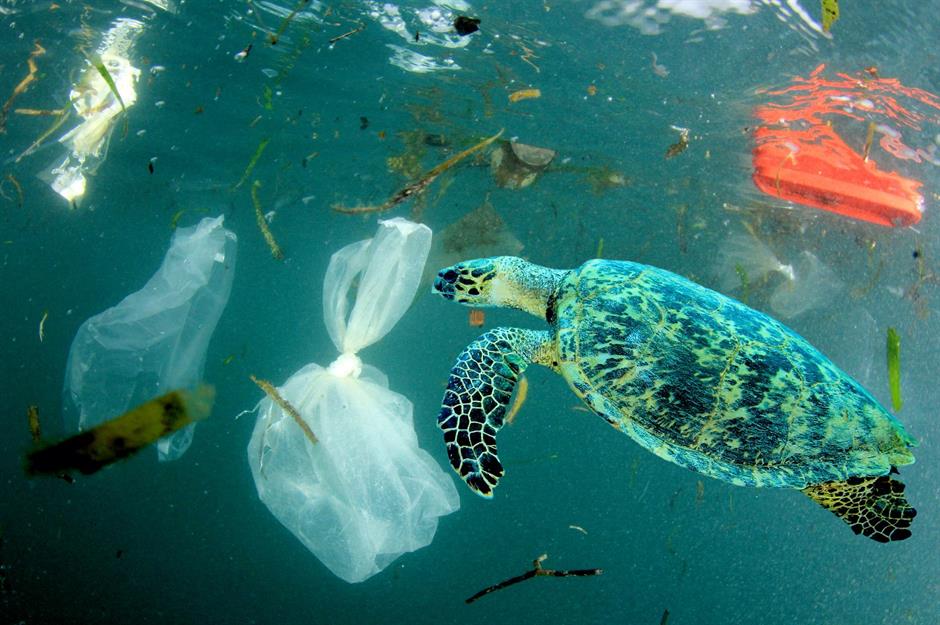
- Polyethylene is the most commonly used plastic nowadays, found in plastic bags, plastic films, and bottles, and it accounts for half of the plastics discovered in Greenland and Antarctica.
- Tire dust found in Greenland includes hazardous particles that may kill sea creatures and, according to scientific tests, can destroy human DNA.
- Polyethylene terephthalate is commonly used in food and beverage packaging, contributing to one-fifth of Greenland’s plastic pollution.
Materić said, “Our data suggest that nanoplastics pollution is not a new problem.” He added, “We are only now becoming aware of it because we have recently developed the right method to measure it.” Previously in 2021, his team managed to detect nanoplastics in the Alps.
“In the Greenland core, we see nanoplastics pollution happening all the way from the 1960s. So organisms in that region, and likely all over the world, have been exposed to it for quite some time now.”
Alert: Plastic poses a menace to all of us
For decades, plastic has been one of the chemical pollutants that has been expanding in the environment across the world. Animals mistaking it for food, blocking drainage systems, flooding low-lying areas, or just spoiling the aesthetics are all sad facts of life due to the ubiquity of plastic pollution.
Consider how many animals unwittingly consume and lick plastic garbage, not to mention how many humans unknowingly inhale microplastics. According to the Environmental Investigation Agency (EIA), as reported in Daily Mail, plastic pollution is a “planetary emergency” equal to climate change.
Plastic pollution is found from the highest point of the Earth to the deepest ocean, from the most common to the most remote, suggesting that it is something of a great deal. According to the EIA, although dedicated multilateral agreements on tackling biodiversity loss and climate change have been in place for 30 years, no such instrument exists to fight plastic pollution, despite being one of the most prevalent and harmful pollutants on Earth.
However, the practical endeavor to reduce the use of plastic in everyday life has been underway since several years ago. Small examples are bringing your own shopping bag while doing groceries or minimizing the use of straws at some restaurants.
So, have you practiced any of the efforts to reduce the use of plastics in your daily life?

Mariana Trench: 8 Fascinating Facts About the Earth’s Deepest Place
10 most famous scientists who contributed to astronomy and space
Top 25 extremely stunning photos of Northern Lights of 2020 revealed

Meteorite makes Indonesian man a millionaire as piece crashes through his roof
It’s Now Possible to Predict Blood Cancer With Ten-Second Videos
This Inexpensive Method Speeds up Analysis of 3D Printed Metal Parts

SpaceX Dragon: A Game Changer for NASA
Tiny fish, big boom: This small fish found to roar like a gunshot

Turkish city unveils design of Mars Colony project for tourists

Researchers Reveal the Source of the Electron Rain Phenomenon
A New Study Reveals How Climate Change Will Affect Sound Travels Underwater
Here Are 6 Space Technologies We Can Benefit to Improve Life on Earth
SpaceX Announced Crew Dragon Will No Longer Be Produced
Russia Warns Sanctions on Moscow Could Endanger the ISS
A New Study Reveals How to Make Walking Easier

Remote-control cars to race on the Moon in 2021
Space Debris Problem Is Getting Worse: Causes and Removal Efforts of Rambling Junk
Microplastic Pollution Detected in Human Blood for the First Time

Nvidia CEO declares coding’s end in AI era
Here Is Blue Origin’s Touristic Rocket: The New Shepard Design
The Fastest Manned Plane in the World: Here’s The Insane Engineering of the X-15
Here Are 6 Space Technologies We Can Benefit to Improve Life on Earth
Pentagon Formed A New Group To Investigate UFO Reports
Space Debris Problem Is Getting Worse: Causes and Removal Efforts of Rambling Junk
From New Zealand to the US: The Rocket Lab Story
Here Is Blue Origin’s Touristic Rocket: The New Shepard Design
Take a Look at Earth From Space: Glasgow, Scotland
NASA Is Preparing Next Generation Spacesuits for Moon Mission and Beyond
Remote-control cars to race on the Moon in 2021
Meteorite makes Indonesian man a millionaire as piece crashes through his roof
NASA sends a new Space toilet for astronauts to ISS

 Earth & Energy5 years ago
Mariana Trench: 8 Fascinating Facts About the Earth’s Deepest Place

 Space6 years ago
10 most famous scientists who contributed to astronomy and space
- Skywatching6 years ago
Top 25 extremely stunning photos of Northern Lights of 2020 revealed
- Engineering6 years ago
Meteorite makes Indonesian man a millionaire as piece crashes through his roof

 Science5 years ago
It’s Now Possible to Predict Blood Cancer With Ten-Second Videos
 Engineering5 years ago
This Inexpensive Method Speeds up Analysis of 3D Printed Metal Parts
- Infographic6 years ago
SpaceX Dragon: A Game Changer for NASA

 Earth & Energy3 years ago
Tiny fish, big boom: This small fish found to roar like a gunshot