
Space
Arecibo telescope gets $8 million to be reconstructed
The funding seems not enough, but it could be a start for possible donation campaign.

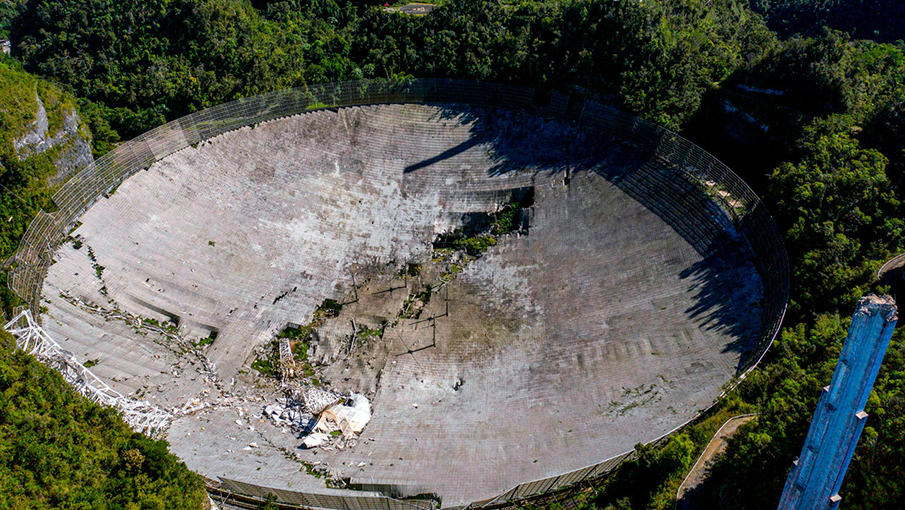
We reported on November 21, 2020 that Arecibo telescope would be dismantled permanently due to the broken two cables supporting the system, of which engineers say it is unfeasible to mend it safely.
The US National Science Foundation (NSF), which owns the Arecibo Observatory, announced the 57-year-old radio telescope would be decommissioned, adding that attempts to repair could put workers and staff at risk.
But now astronomers can become hopeful for the collapsed Arecibo telescope as $8 million was approved to help reconstruct the telescope, per Engadget.
Puerto Rico Governor Wanda Vázquez has signed an executive order for monetary aid to one of astronomy’s most prominent icons, saying its reestablishing is important in terms of “public policy.”

Associated Press
The fund is not enough to mend the telescope; however, it can encourage some in the US government to allot the extra funding required to resuscitate the Observatory. The Arecibo had difficult times in 2020, but 2021 can be a brighter year for the facility.
About Arecibo telescope
Built in 1963, the Arecibo telescope was the world’s largest radio telescope from which astronomers sent signals to search for life beyond our solar system, and make contact.
Also, the first confirmed exoplanet orbiting the pulsar PSR B1257+12 was discovered in 1990 via the Arecibo. Near-Earth asteroids and fast radio bursts are among its other works.
Despite hitches, NSF astronomy division director Ralph Gaume said in November that limited scientific work would continue on the site.
🙁Sad day for astronomical society.
National Science Foundation released footage of collapse of Arecibo Observatory in Puerto Rico. Video shows moment when support cables snapped and fall onto observatory’s wide dish. 📡#Arecibo #Telescope #AreciboObservatory pic.twitter.com/UqkClsgp6C
— Orbit Inside (@orbitinside) December 3, 2020
“The observatory is not closing. Research involving archived data from the 305-meter telescope will continue and NSF is looking for ways to restore operations with the observatory’s other infrastructure as soon as possible, including the 12-meter telescope and LIDAR facilities,” NSF said in a statement to Engadget.
“NSF will continue the work of clearing and securing the site of the 305-meter telescope,” it added.
Additional information: Number of satellites in orbit by major countries and rest of the world as of March 31, 2020, per Statista.
[h5p id=”4″]

Mariana Trench: 8 Fascinating Facts About the Earth’s Deepest Place

10 most famous scientists who contributed to astronomy and space

Top 25 extremely stunning photos of Northern Lights of 2020 revealed

Meteorite makes Indonesian man a millionaire as piece crashes through his roof

It’s Now Possible to Predict Blood Cancer With Ten-Second Videos
This Inexpensive Method Speeds up Analysis of 3D Printed Metal Parts

SpaceX Dragon: A Game Changer for NASA
Tiny fish, big boom: This small fish found to roar like a gunshot

Turkish city unveils design of Mars Colony project for tourists

Researchers Reveal the Source of the Electron Rain Phenomenon

A New Study Reveals How Climate Change Will Affect Sound Travels Underwater

Here Are 6 Space Technologies We Can Benefit to Improve Life on Earth
SpaceX Announced Crew Dragon Will No Longer Be Produced
Russia Warns Sanctions on Moscow Could Endanger the ISS

A New Study Reveals How to Make Walking Easier

Remote-control cars to race on the Moon in 2021

Space Debris Problem Is Getting Worse: Causes and Removal Efforts of Rambling Junk

Microplastic Pollution Detected in Human Blood for the First Time

Nvidia CEO declares coding’s end in AI era
Here Is Blue Origin’s Touristic Rocket: The New Shepard Design

The Fastest Manned Plane in the World: Here’s The Insane Engineering of the X-15
Here Are 6 Space Technologies We Can Benefit to Improve Life on Earth
Pentagon Formed A New Group To Investigate UFO Reports
Space Debris Problem Is Getting Worse: Causes and Removal Efforts of Rambling Junk
From New Zealand to the US: The Rocket Lab Story
Here Is Blue Origin’s Touristic Rocket: The New Shepard Design

Take a Look at Earth From Space: Glasgow, Scotland

NASA Is Preparing Next Generation Spacesuits for Moon Mission and Beyond
Remote-control cars to race on the Moon in 2021
Meteorite makes Indonesian man a millionaire as piece crashes through his roof
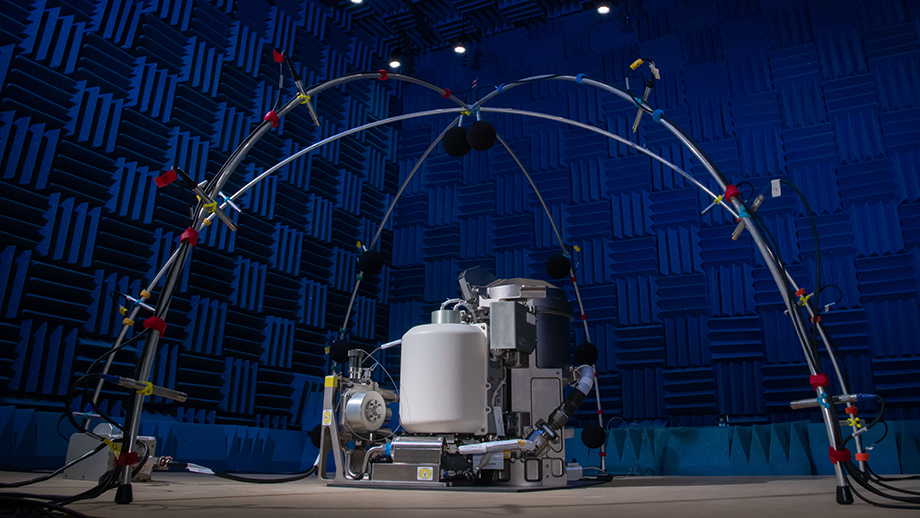
NASA sends a new Space toilet for astronauts to ISS

 Earth & Energy5 years ago
Mariana Trench: 8 Fascinating Facts About the Earth’s Deepest Place

 Space6 years ago
10 most famous scientists who contributed to astronomy and space
- Skywatching6 years ago
Top 25 extremely stunning photos of Northern Lights of 2020 revealed
- Engineering6 years ago
Meteorite makes Indonesian man a millionaire as piece crashes through his roof

 Science5 years ago
It’s Now Possible to Predict Blood Cancer With Ten-Second Videos
 Engineering5 years ago
This Inexpensive Method Speeds up Analysis of 3D Printed Metal Parts
- Infographic6 years ago
SpaceX Dragon: A Game Changer for NASA

 Earth & Energy3 years ago
Tiny fish, big boom: This small fish found to roar like a gunshot