
Space
1986 Challenger Disaster Shocked the World. Here’s What NASA Learned From It
A devastating tragedy that tells us safety comes first.


Spaceflight is always risky. You never know what you will encounter during missions. The Space Shuttle Challenger disaster in 1986 reminds us to pay utmost attention to works regarding flights into space to prevent possible new accidents.
The explosion of the Challenger occurred after the space shuttle carrying seven astronauts lifted off from Cape Canaveral, Florida at 11.38 a.m. EST, on January 28, 1986. Seventy-three seconds following the ascent, the shuttle exploded in a plume of smoke and fire, in which no one survived.
Gregory Jarvis, Judith Resnik, Dick Scobee, Ronald McNair, Mike Smith, Ellison Onizuka, and Christa McAuliffe died in the accident. Hundreds on the ground and millions in front of televisions bore witness to the heart-wrenching moment.
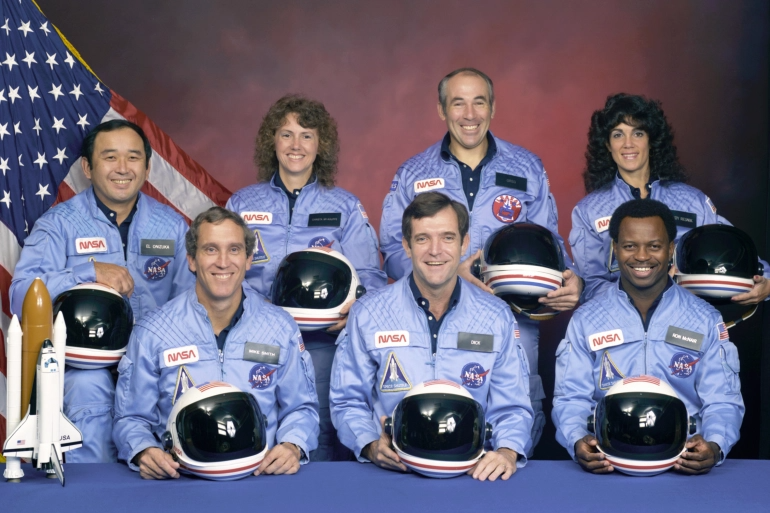
Crewmembers of NASA’s Space Shuttle Challenger. Image: NASA
A tragedy that shocked the world: Challenger explosion
As this tragedy shocked the world, an investigation conducted to find the cause of the explosion revealed considerable inadequacies in NASA’s scientific approach. The breakdown in the booster engine arose from rubber O-rings that were responsible to seal rocket boosters and these rings were never examined to withstand extreme cold weather conditions. The cold rubber stiffened on the morning of the launch, failing to completely seal the joint.
During the take-off, one of the seals on the booster rocket opened and exhaust fumes leaked out, causing the deadly disaster, according to Space.com. NASA, which faced immense shockwaves of the fatal accident, shared lessons that it learned from the Challenger disaster so that similar images don’t take place again.
Allan McDonald, then-director of the Space Shuttle Solid Rocket Motor Project for the engineering contractor Morton Thiokol, had rejected to sign the launch recommendation due to safety concerns as he predicted that the rockets would explode if the O-rings were to fail. These concerns were published by NASA.
Despite Thiokol engineers’ solicitude about the mission due to the effect of low temperature on the O-rings, NASA personnel pressured Thiokol to agree to the launch, the presentation says. O-ring resealed during ascent. Vibrations and crosswinds caused a catastrophic loss of sealing. In the photo below, escaping gases from the Solid Rocket Booster (SRB) joint are seen.
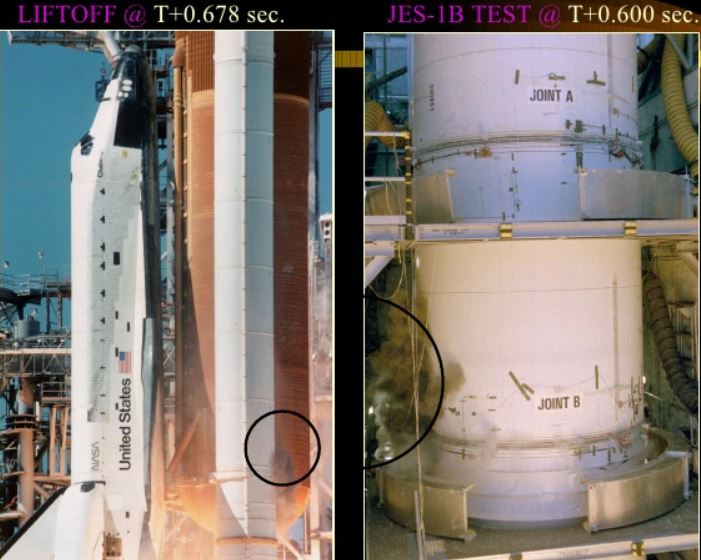
Escaping gases were seen from the rocket booster. Slide Share
What NASA learned from Space Shuttle Challenger disaster
A bundle of problems regarding the space shuttle’s SRB failure started with the faulty design of its joint, and both NASA and the contractor failed to recognize the situation as a problem, then they failed to mend it, which was accepted as a reasonable flight risk.
The decision-makers related to the flight were also unaware of the O-rings issue and the joint. “There were serious ongoing weaknesses in the shuttle Safety, Reliability, and Quality Assurance Program, which had failed to exercise control over the problem tracking systems, had not critiqued the engineering analysis advanced as an explanation of the Solid Rocket Motors (SRM) seal problem,” per the presentation.
We cannot become complacent. We cannot be silent when we see something we feel is unsafe. We must allow people to come forward with their concerns without fear of repercussion.
Today, the risk of human spaceflight is more than 10,000 times greater than the risk of flying on a commercial airliner, according to a report concerning safe flight into space. We hope that such a tragedy as seen in the Space Shuttle Challenger disaster will not reappear.

Mariana Trench: 8 Fascinating Facts About the Earth’s Deepest Place
10 most famous scientists who contributed to astronomy and space

Top 25 extremely stunning photos of Northern Lights of 2020 revealed

Meteorite makes Indonesian man a millionaire as piece crashes through his roof

It’s Now Possible to Predict Blood Cancer With Ten-Second Videos
This Inexpensive Method Speeds up Analysis of 3D Printed Metal Parts

SpaceX Dragon: A Game Changer for NASA
Tiny fish, big boom: This small fish found to roar like a gunshot

Turkish city unveils design of Mars Colony project for tourists

Researchers Reveal the Source of the Electron Rain Phenomenon

A New Study Reveals How Climate Change Will Affect Sound Travels Underwater
Here Are 6 Space Technologies We Can Benefit to Improve Life on Earth
SpaceX Announced Crew Dragon Will No Longer Be Produced
Russia Warns Sanctions on Moscow Could Endanger the ISS
A New Study Reveals How to Make Walking Easier

Remote-control cars to race on the Moon in 2021
Space Debris Problem Is Getting Worse: Causes and Removal Efforts of Rambling Junk

Microplastic Pollution Detected in Human Blood for the First Time

Nvidia CEO declares coding’s end in AI era
Here Is Blue Origin’s Touristic Rocket: The New Shepard Design
The Fastest Manned Plane in the World: Here’s The Insane Engineering of the X-15
Here Are 6 Space Technologies We Can Benefit to Improve Life on Earth
Pentagon Formed A New Group To Investigate UFO Reports
Space Debris Problem Is Getting Worse: Causes and Removal Efforts of Rambling Junk
From New Zealand to the US: The Rocket Lab Story
Here Is Blue Origin’s Touristic Rocket: The New Shepard Design

Take a Look at Earth From Space: Glasgow, Scotland
NASA Is Preparing Next Generation Spacesuits for Moon Mission and Beyond
Remote-control cars to race on the Moon in 2021
Meteorite makes Indonesian man a millionaire as piece crashes through his roof
NASA sends a new Space toilet for astronauts to ISS

 Earth & Energy5 years ago
Mariana Trench: 8 Fascinating Facts About the Earth’s Deepest Place

 Space6 years ago
10 most famous scientists who contributed to astronomy and space
- Skywatching6 years ago
Top 25 extremely stunning photos of Northern Lights of 2020 revealed
- Engineering6 years ago
Meteorite makes Indonesian man a millionaire as piece crashes through his roof

 Science5 years ago
It’s Now Possible to Predict Blood Cancer With Ten-Second Videos
 Engineering5 years ago
This Inexpensive Method Speeds up Analysis of 3D Printed Metal Parts
- Infographic6 years ago
SpaceX Dragon: A Game Changer for NASA

 Earth & Energy3 years ago
Tiny fish, big boom: This small fish found to roar like a gunshot